Monday, December 17,2012
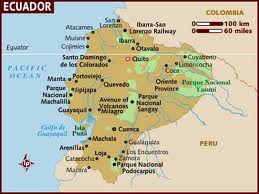
Guayaquil, Ecuador

DO YOU LIKE CHOCOLATE?!
DO YOU LIKE MANGOS?!?!
-did we ask if you liked chocolate?…
That was the question asked of us as we climbed on to the bus that was to take us about an hour and a half inland.
-well, obviously the answer is YES!
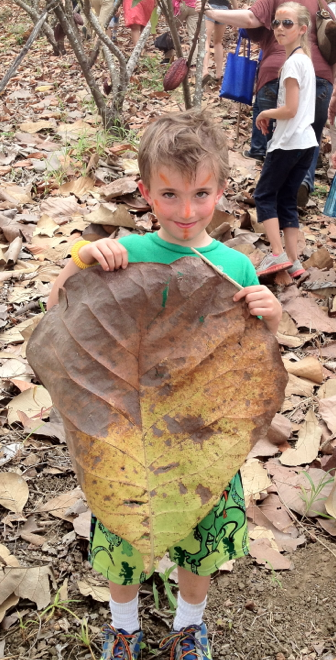
Then you are in the right place.
Welcome to Guayquil, Ecuador. The cocoa, mango and banana capitol of the world.
Ecuador (which literally translates as “Republic of the Equator“) itself has a population of about 14 million -while the city of Guayaquil has 3 million. Arguably (if you ask a local, like our tour guide) Guayaquil is the financial and agricultural center of the country. The actual capitol of Ecuador is Quito. The main language spoken here is Spanish (94% of the population speaks it) the remaining 6% speak 11 other languages.
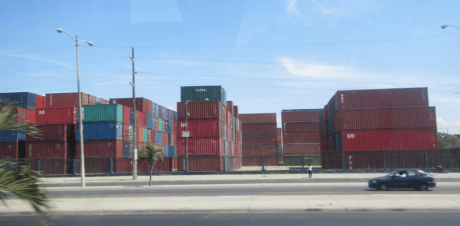
It is an industrialized 3rd world country , it is a representative democratic republic, where everyone works. We can see this the moment we get off the boat. -In other ports there have been stores and people. on this one, there is nothing but massive containers. Filled with produce and goods.
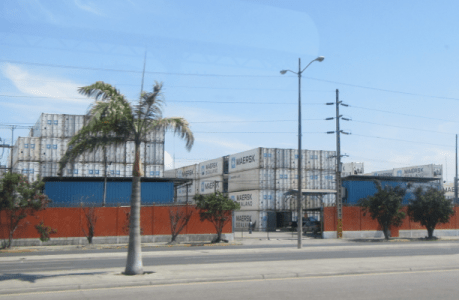
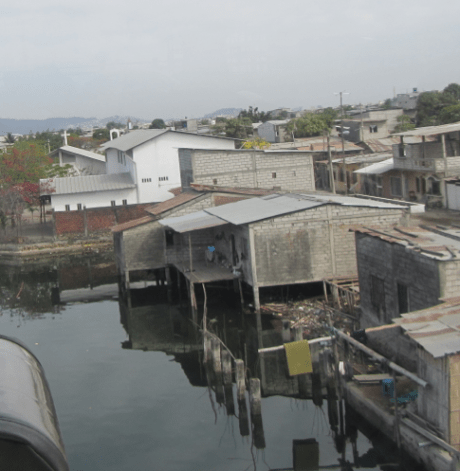
Guayquil is a city of stark contrasts. There is little beauty in the city itself. Nearly everything is made to work. Buildings and homes all made from and of cement -and some bamboo.
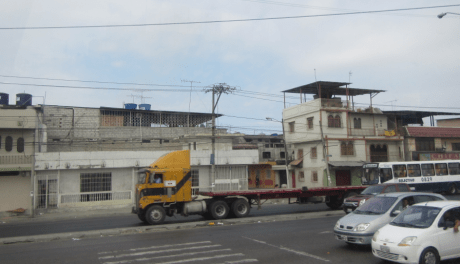
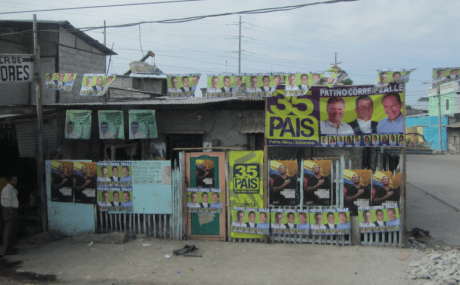
The most colorful things in the city are the political ads pasted on the sides of some buildings.


All the vehicles are trucks or cars. There are no pleasure vehicles. Motorcycles are also in large use.
This is a hardworking city. -But also a dangerous city. We can feel this as we exit and make our way to the country.
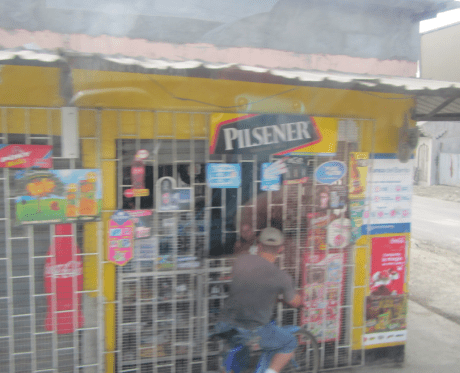
The wrought iron window and door grates, were once ornamental and now serve as safety. They came from Paris. -The French immigrated when cocoa became among the largest export.
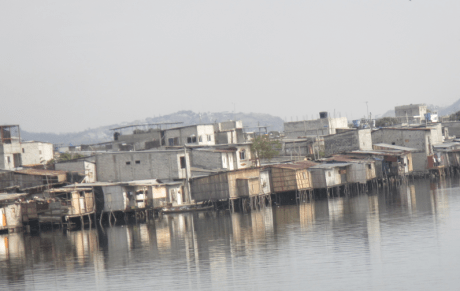
Guayaquil also boasts the worlds largest squatter population. In fact there is illegal land trafficking. There are many police. It is the most dangerous city of all we have been and will be going to. Every building has a water shed on top because they live only four feet above sea level. There are two seasons, dry and wet. And there are three climates: hot, hotter, hottest.
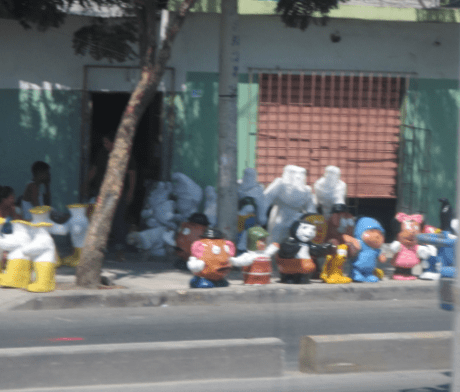
One cool note: in Ecuador when New Year’s Eve happens, they celebrate by taking these large paper mache figures (like above, usually made to look like popular characters like Mr. PotatoHead, or Shrek) and FILL THEM UP WITH FIREWORKS. Then they light them in the streets at midnight!
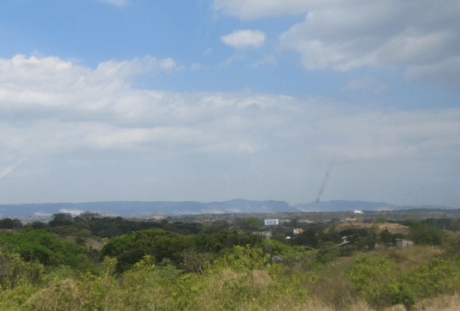
As we get into the country the scenery changes quickly. It is a very dry climate (the rainy season starts in January and ALL the rainfall for the year happens within this month or so period). It is a dry tropical forrest. All the schools are closed for the HOTTEST season, from January until May. That is their summer vacation.

Okay, so let’s get on to the cocoa and mango plantation.
100 percent of French, Swiss and most American chocolate comes from Ecuador. All nestle products comes from here. The plantation was about an hour outside the city. When we arrived we were treated to local fruit drink and fried plantains with home made white cheese. It was an amazing beautiful plantation and home.
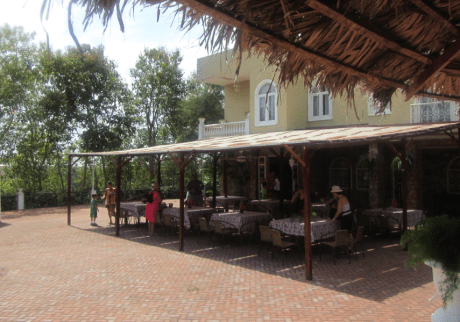
We hiked through the plantation and saw amazing varieties of trees including
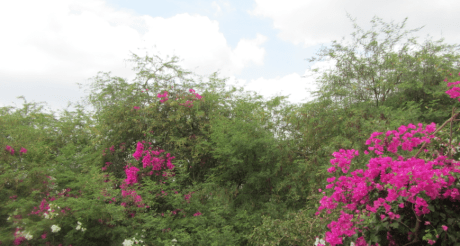
Poncianas with pink blossoms,

Jacaronda with amazing purple blossoms,
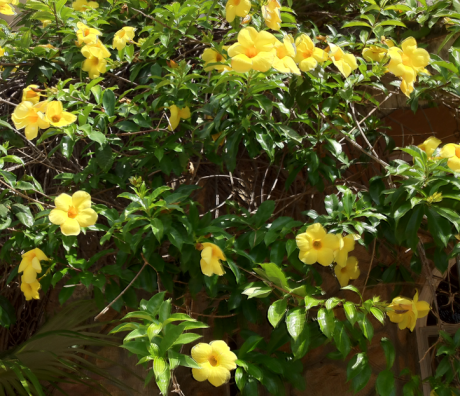
Alamandra with beautiful yellow flowers which is a kind of Hibiscus,
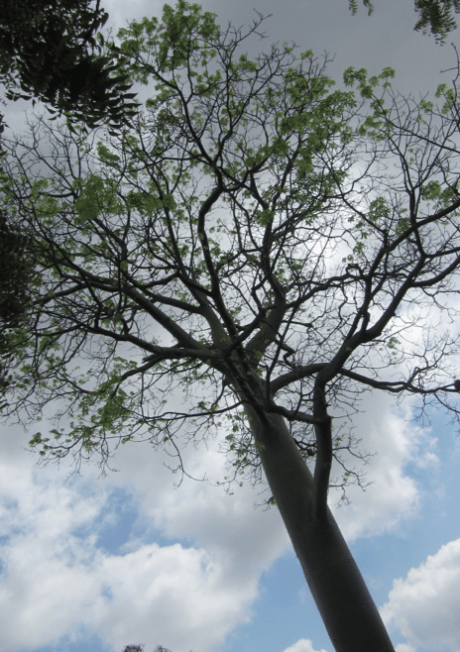
Mahogany, Teak, Kapoc with extremely thick trunk,
the Noni tree with fruit that helps cure cancer
and obviously the cocoa trees, which looked a lot more like big shrubs!

The plantation was originally owned by a german family named Segrada
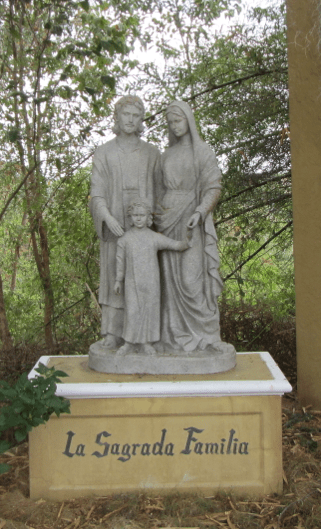
They were forced to leave during world war II. Since then, the plantation has been bought and sold and now is owned by another family. Although they do not live there, they keep (out of respect for the original family) the feeling of a true home.
Including the graves of the families beloved dogs.
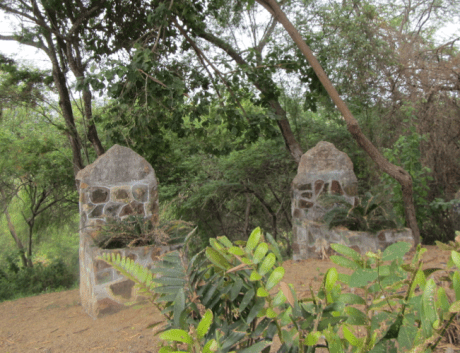
Okay, now on to the good stuff: CHOCOLATE!
They way that Chocolate is made is pretty amazing.
First, they start with a large COCOA SHELL (-which really does beg the question: what came first, the Nut or the Tree?..).
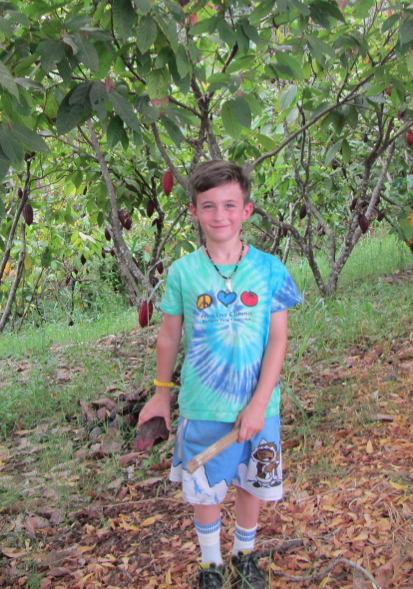
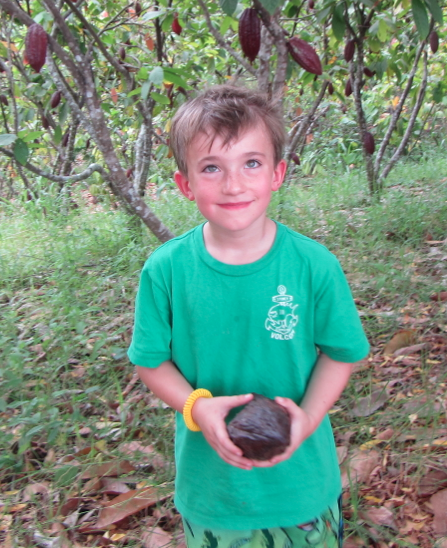
Inside are a bunch of Cocoa Nuts, or seeds.


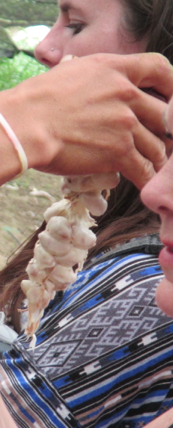
They plant the seed
into a small bag filled with soil.
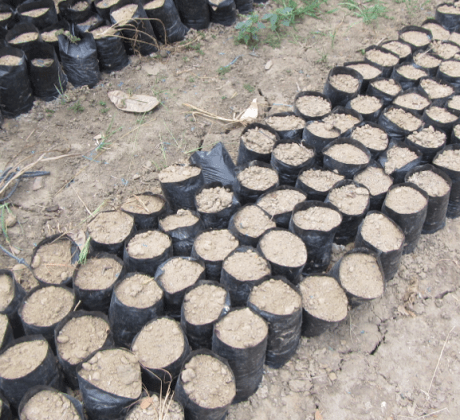
In about 3 weeks, it looks like this.

THEN comes the MAGIC part.
The farmer “splices” or cuts in a branch from a very special cocoa tree called CNN-51.

This branch grafts into the tree and increases the production of the tree by SIX TIMES!!
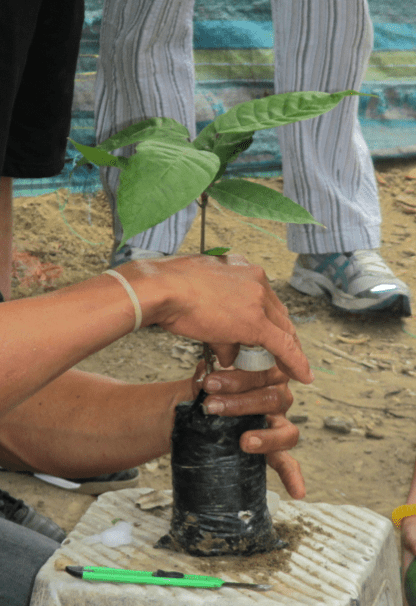

this is what it looks like in three months.

-and three years.

At this point, the tree can be planted and it is one season form beginning to produce. The large PODS are harvested. and the same process as in the beginning, the seeds or nuts are cut out of the POD.
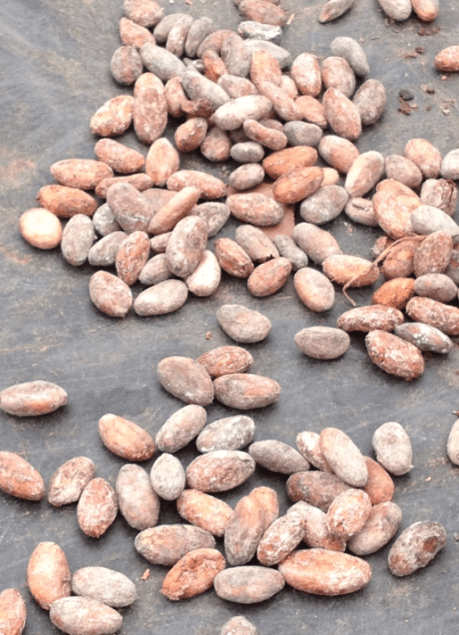
The nuts are then put in large sacks and into open rooms with tin roofs to “bake” or dry out.
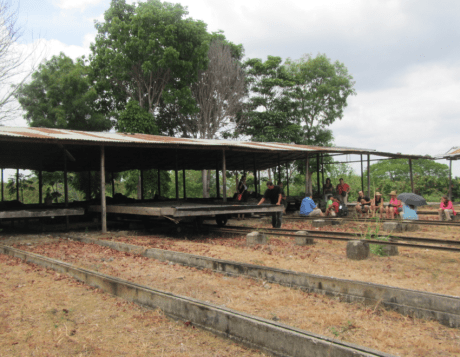
After sitting there for a couple of days, the sacks taken out and loaded into a carriage.

From here they are carted (by tractor and horse) up into the factory, where this nut becomes chocolate.
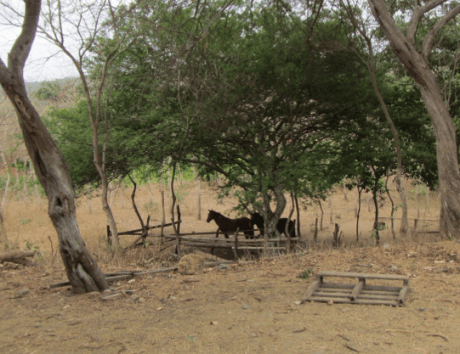
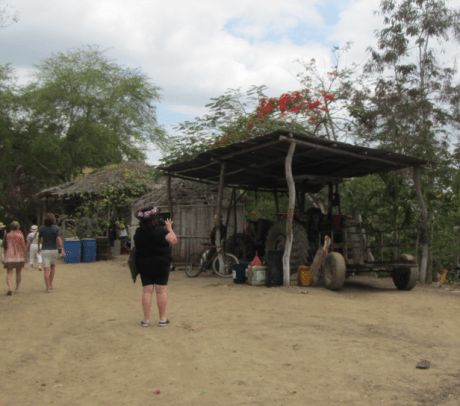
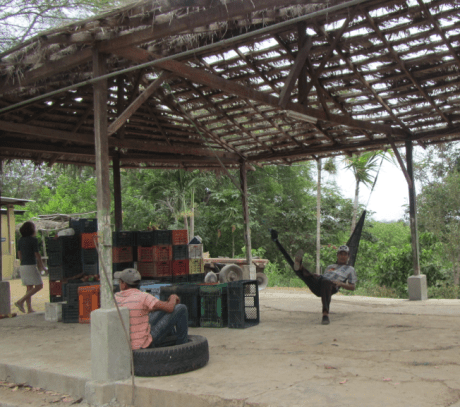
All of the nuts are loaded into this machine.
they are heated up and then cooled down.
this turns the nuts into almost a thick powder. This powder is then heated up again and stirred. the longer it is heated and stirred the sweeter it becomes.
Then… TADA: CHOCOLATE!!
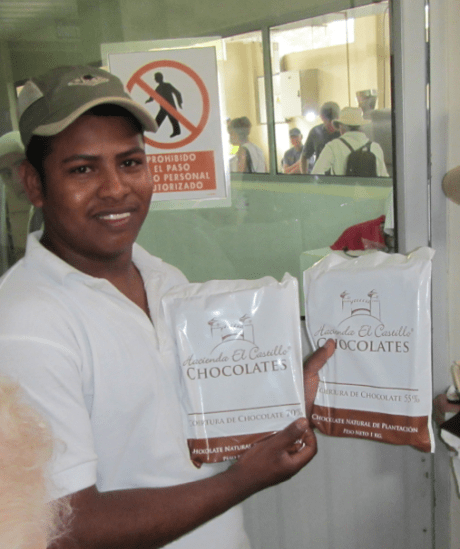
We also got to taste the most delicious mango we have ever had

and see the berries that help make red food dye
-that we used for face paint.
Leo created his own game, which he calls stick bowling, where you push a watermelon down a hill with a long bamboo stick.
He also created a new drumming instrument with the shell casing of the cacao plant and a shorter bamboo stick. Leo and Finn climbed a mango tree and picked their own mangoes.
Whew! I think that’s enough for one day.
Next: PERU!
Travel Safe!
JKLM
🙂
 leo and finn go to south america!