Sunday, December 23, 2012
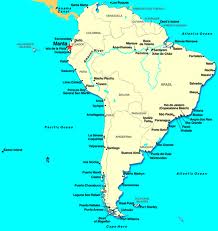
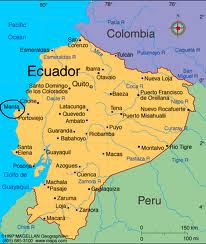
Manta, Ecuador
This is going to be a long post, as it was a long day!
Today we were back in Ecuador and went to see three different Eco-Artisans practicing their craft. A “ECO- Artisan” is an individual or group that makes a product from the earth in a completely natural way. That is, without leaving a “carbon footprint”. So all the products are usually made by hand and sometimes by a small village that uses the selling of goods to support their community.

We arrived at the port of Manta, Ecuador. It is one of the TUNA capitols of the world. 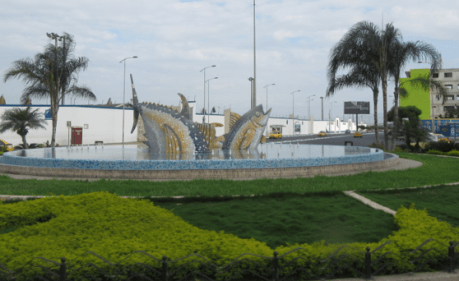
And boy, are they proud of that!
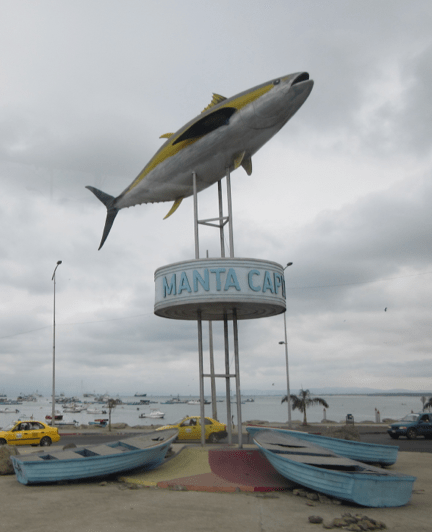
Every place you go tuna is served and celebrated!
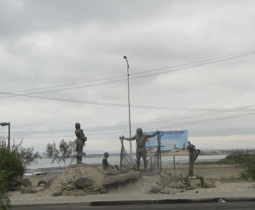
It is also known for something else: the famed PANAMA HAT.
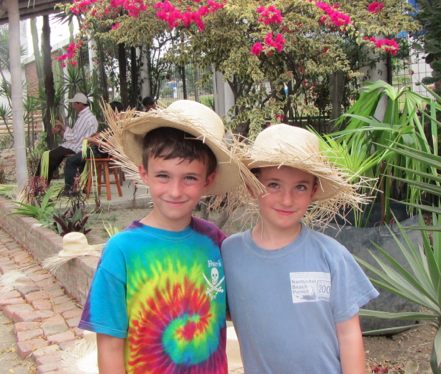
Fact: Panama Hats are not actually made in Panama. True.
They are made in Ecuador. Legend has it that when President Teddy Roosevelt came in for the opening of the Panama Canal he was wearing one. when asked where he got it -with his famous toothy grin he replied “Why, PANAMA of course!”
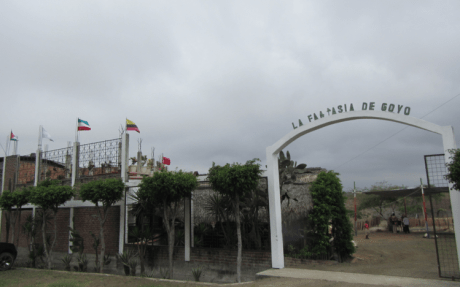
We began with a short ride to El Rancho where we watched them make Panama hats.
Here’s how they make it:
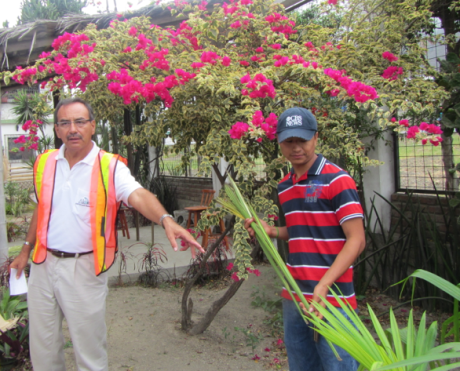
First they showed us how the fiber is obtained from the carludovica plant, a palm like plant that only grows in the tropics.
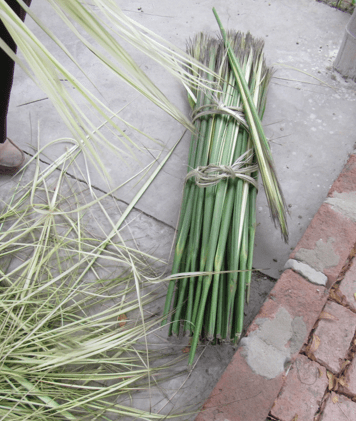
Then they gather and bundle the leaves of the plant.
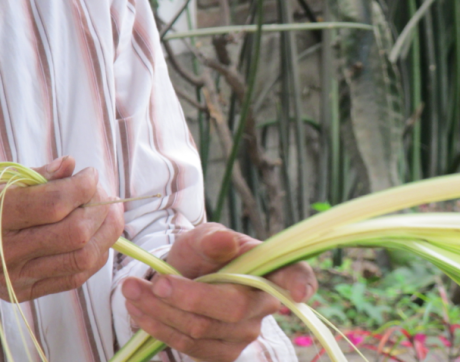
Next, they “split” the leaves by using a cactus needle.
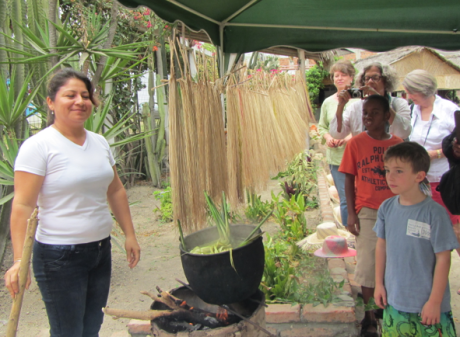
Then the split leaves are boiled for 60 seconds to make then soft and easier to work with. At the point any dyes are added to the water for colors.
Next comes weaving.
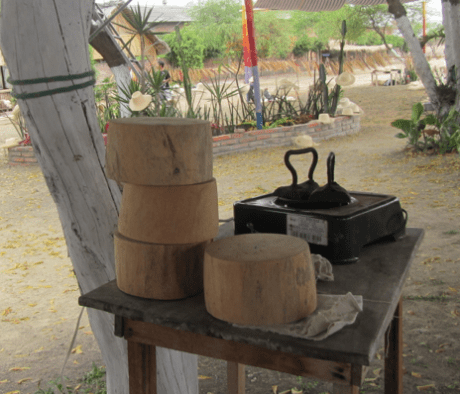
A hat size is selected and using a series of wooden hat molds -and a leather sizing strap, the weaving begins.
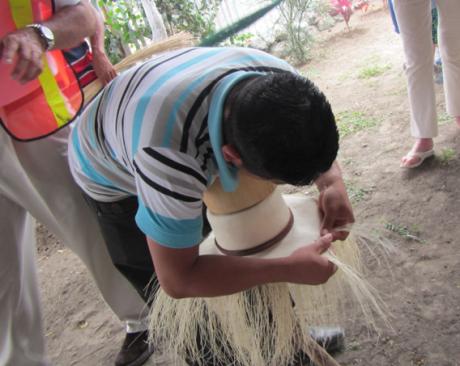
The weaving takes places in this rather uncomfortable position.

From here, the hat then gets trimmed -and all the loose ends are bound.
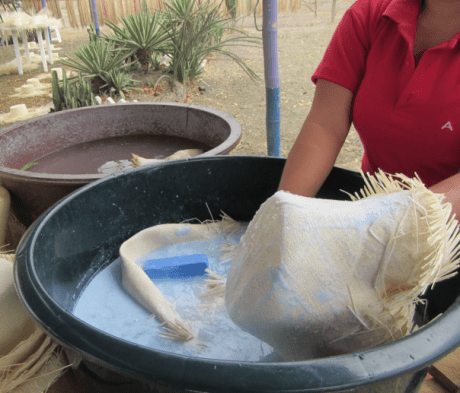
The hat is then washed with a special blue soap.
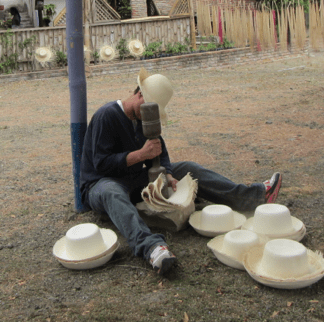
Then the hat is pounded with a series of weights.
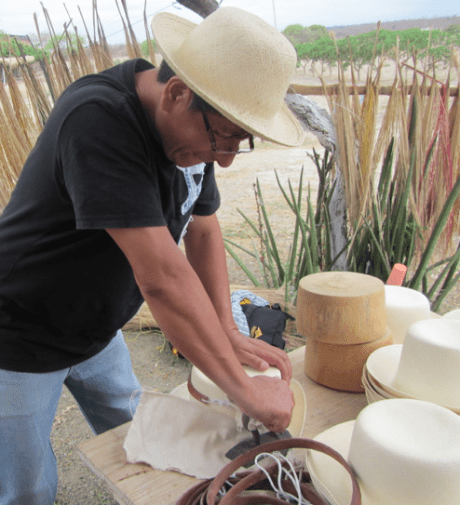
Then, as a last step, each hat is ironed.
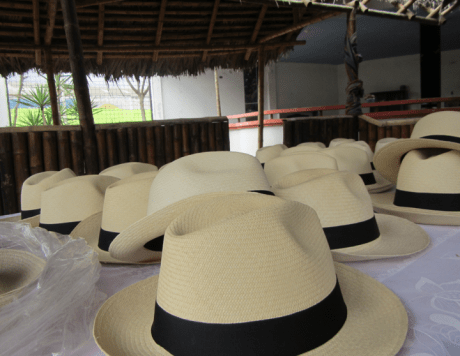
TADA: the Panama Hat. made locally here in Ecuador!
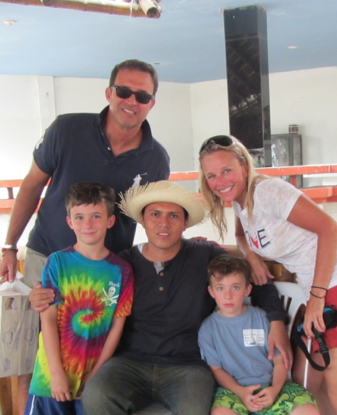
Here is Rafael, who made and sold our hats to us!
Each hat takes between one and three months to create. The finer the weave the longer it takes. We bought hats for Leo and Finn and they look smashing:) the hats are packed up in boxes made of balsa wood. Finn made friends with Rafael, one of the artisans and sat with him for some time asking him questions and managing to bridge the language barrier quite perfectly.
We took a short ride to El Chorilla to a Cabuya Factory.
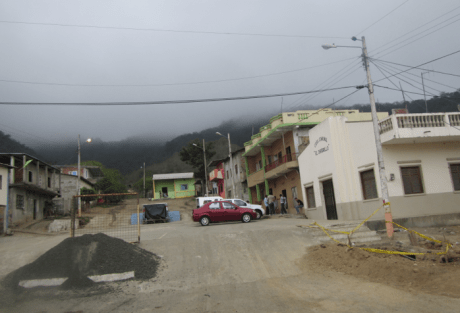
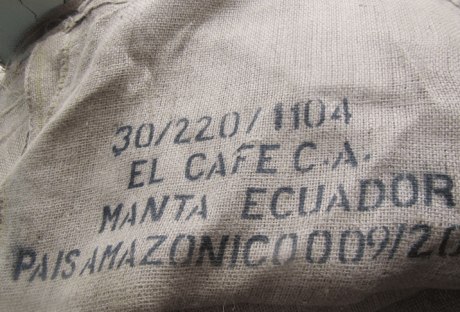
Cabuya is a type of rope ( often brightly colored) used in making bags and sacks for shipping.

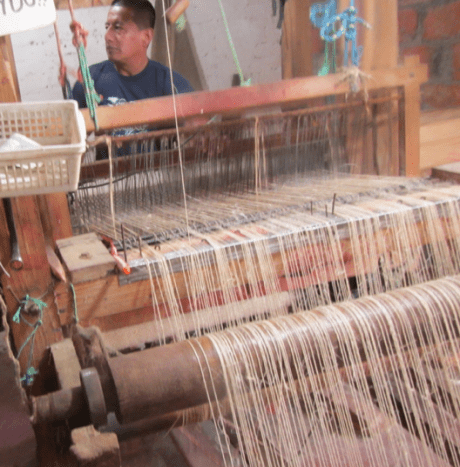
We watched how they strip the agave plant of its outer shell and tear it into strings.
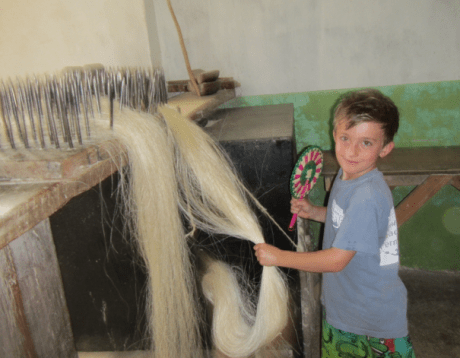
From there they make spools and eventually have a loom that draws from 142 spools.
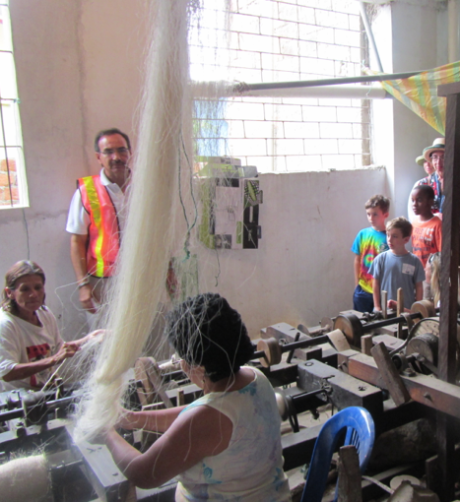
The spools deliver the strands into a small rope like twine, which gets bundled and handed off to the next set of machines.
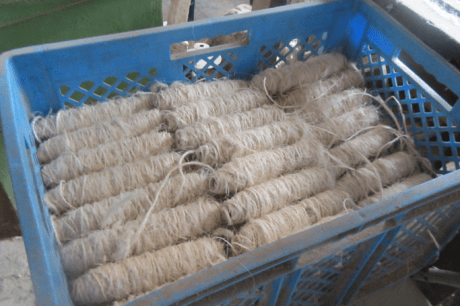
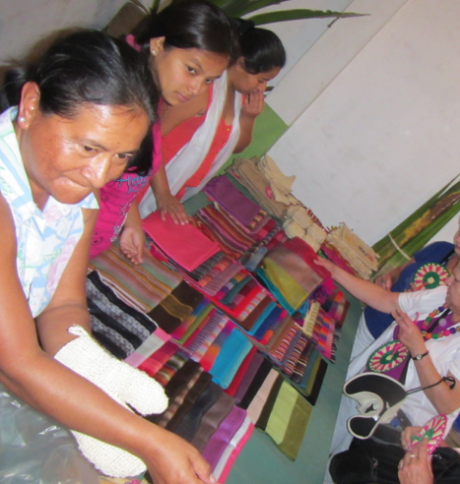
There using a very old fashioned way of working, then twine is combined and made either into a bag
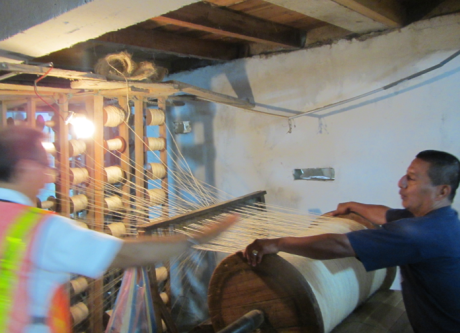
or a hat, or luffa… or whatever!
Pretty cool!
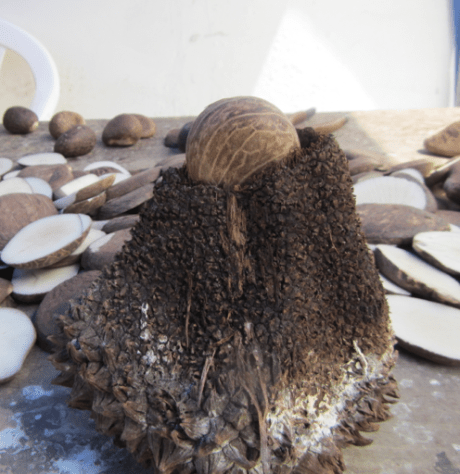
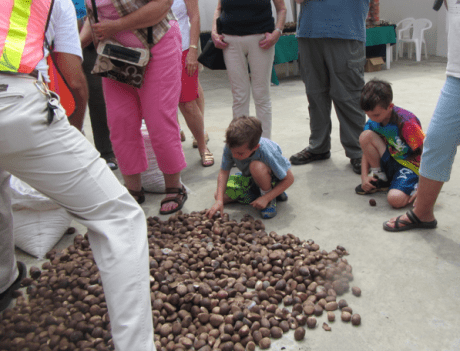
Lastly we went to a Tagua nut factory.

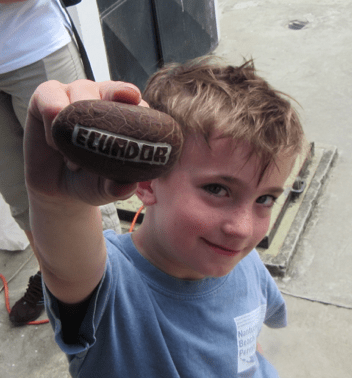
And we watched in amazement as they shelled and carved the nut into animal sculptures, buttons, and jewelry.
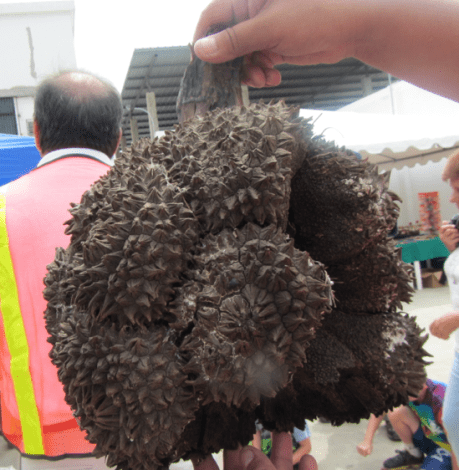
When the nut dries it is as hard as ivory and in fact is called vegetable ivory.

Our second outing began with a ride to Montecristi on a brightly colored bus hat had a band playing on top of it. Buses are the most important mode of transportation because they’re cheap and connect the country’s coastal towns and interior sections. The town is beautiful and still retains a faded elegance of its Spanish heritage. We saw a picturesque wooden building which was the first girls school and has been converted into stalls where artisans sell their wares.
Safe Travels!
JKLM
🙂
Observation:
It was fantastic to see so much art created from natural substances such as plants, nuts and leaves. And inspiring to think of who first imagined that such items could be created from a leaf or a nut or and plant.
 leo and finn go to south america!