Archives for category: Uncategorized

Thursday, December 20, 2012
Screen Shot 2012-12-22 at 10.00.00 PM

Machu Picchu

Wow. What a day. What a country. What a amazing place… (btw there are a TON of photos, so please be patient)

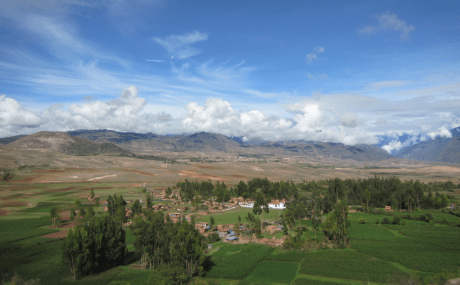
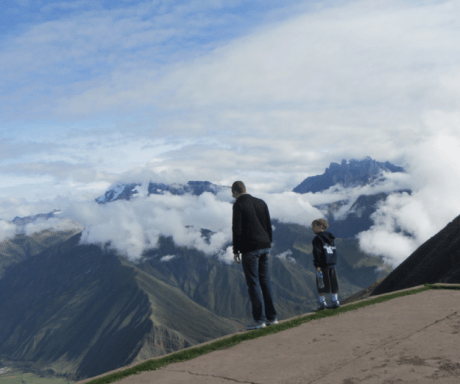
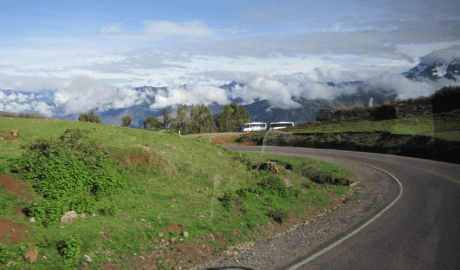
We woke at 5 am, had a quick breakfast and traveled by bus for 2hours through breathtakingly beautiful countryside
Screen Shot 2012-12-22 at 10.43.14 PM


bus

Screen Shot 2012-12-22 at 10.43.37 PM

to the Expedition train.

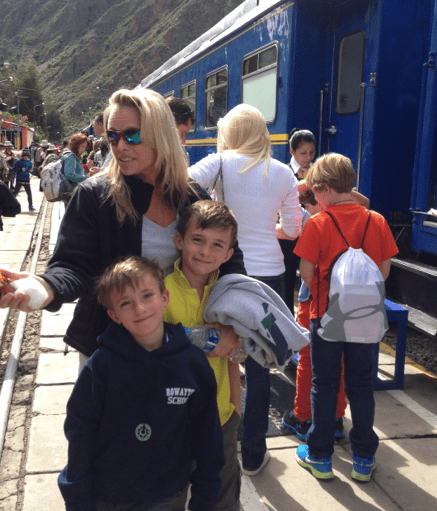
boarding train

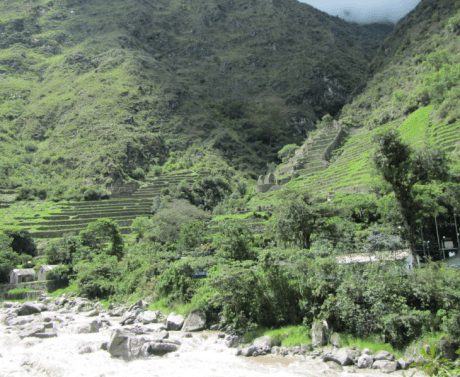
We then traveled by train for 1.5 hours. This train ride is considered one of the top ten most spectacular train rides in the world.
Screen Shot 2012-12-22 at 10.47.18 PM

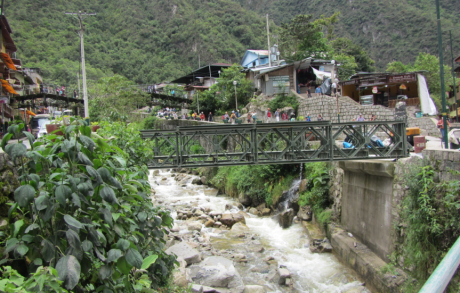
There is a rushing river beside it. Above that the mountains and clouds, the Incan trail and magnificent stone work.

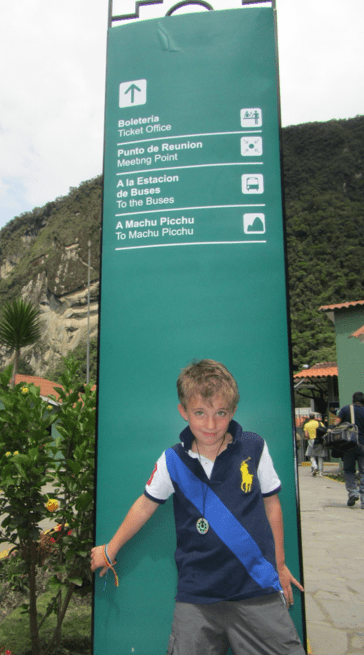
We arrived at Aguas Calientes station and boarded the 20 minute bus to Machu Picchu.
 

Screen Shot 2012-12-22 at 10.47.29 PM


Screen Shot 2012-12-22 at 10.47.45 PM


We had a delicious lunch at Sanctuary Lodge. We ate pork, sweet potatoes and trout. The breads and baked goods here were delicious.
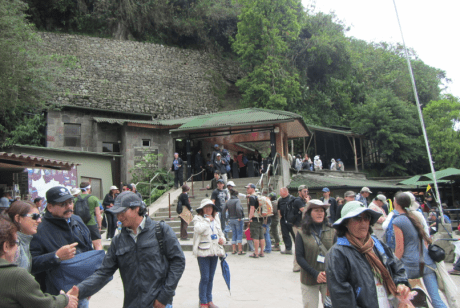
Screen Shot 2012-12-22 at 10.48.24 PM

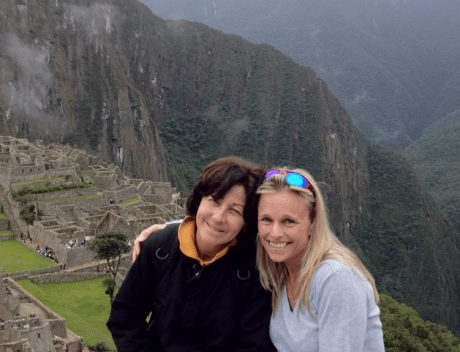
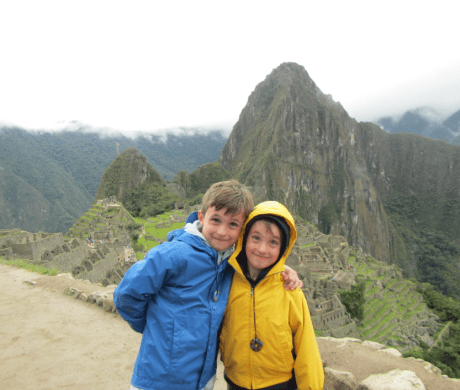
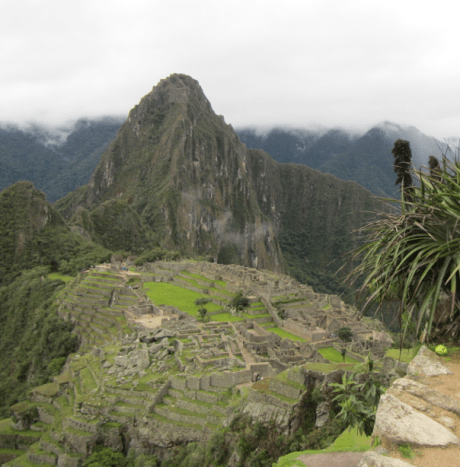
Then, we departed for a tour of one of the seven wonders of the world, Machu Piccu. The magnificence of the natural mountainous landscape was rivaled only by the mind blowing engineering prowess of this powerful Incan City. The city was an Incan sacred scholarly retreat, some believe. It was an elevated city, built by the wise and powerful Incan King Pachacutec.
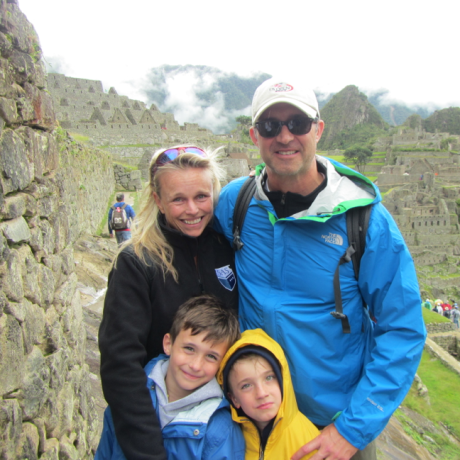
Screen Shot 2012-12-22 at 10.49.17 PM

both by altitude and because of the moral ranking of the men and women who lived there.
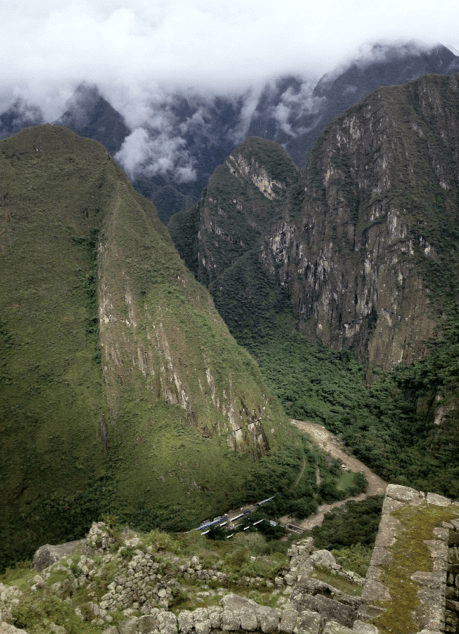
 

Screen Shot 2012-12-22 at 10.53.46 PM

Way down there is the train that took us here.

Some interesting facts: 60% of the city’s construction is invisible to the eye -because it is underground. Such a fantastic metaphor for life as well. Most often we cannot see at least 60 percent of the foundational beauty behind a person, place, plant, animal or art. Here, because of the torrential rains, the city had to be masterly constructed by countless terraces. On each, there is green grass. Beneath that a layer of topsoil. Beneath that a layer of silt and sand. Beneath that up to 8 feet of gravel and rock to wash the rains away. There is a sophisticated, elaborate drainage network with 129 rain water outlets and numerous canals.  system of drains and fountains to get clean water and wash away what is not needed.
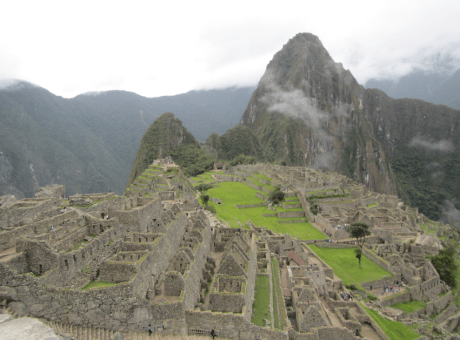
Screen Shot 2012-12-22 at 10.50.38 PM

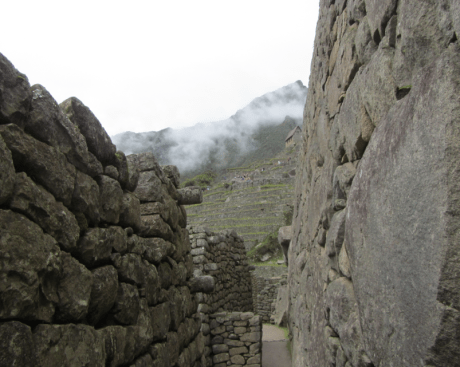
No one knows for sure how the Incans cut, carried and joined the stones in such a way that it is impossible to stick a needle between them. Some say the stones were carried on wooden sleds. They did not have any metal tools so carved the diorite and granite with hard stones called hematite.
Screen Shot 2012-12-22 at 10.50.50 PM

Machu Picchu is built on sacred geography meaning many of its buildings have astronomical relations with the constellations, the moon or sun. On top of a natural pyramid, the Intihuantana aligns the four cardinal directions and connects the four mountains directly to the north, south, east and west.
Screen Shot 2012-12-22 at 10.49.56 PM

The pictures do not do it justice. It literally and figuratively left us breathless. It was an honor to be there.

After our decent, we shopped for a while and had dinner at a lovely restaurant near the train.

We returned by bus, train and bus again arriving at our beautiful hotel in Urubamba, the San Augustin Urubamba Hotel around 9:30 pm.

Travel Safe!

JKLM

🙂

Next: Chinchero Village
December 19, 2012

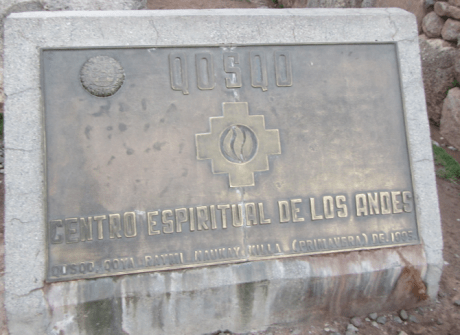
Cusco, Peru

Screen Shot 2012-12-22 at 10.35.44 PM

Here is the beauty and for us one of the lessons of Cusco. Sometimes a place you have only imagined as the necessary stop to get you to your “real” destination has a beauty and magic all it’s own.

Screen Shot 2012-12-22 at 10.38.43 PM


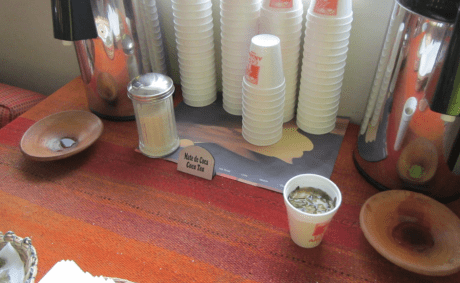
We departed the ship and flew from Callou to Cusco. We took altitude medicine because Cusco is 13,000 feet above sea level. You can completely feel your oxygen level very low so we moved slowly and drank lots of water and were…. Great! We arrived at our hotel, dropped our bags, drank some cacoa tea with leaves from the cacao plant, which is supposed to help with the altitude, had a quick bite to eat and were off.

Screen Shot 2012-12-22 at 10.11.05 PM

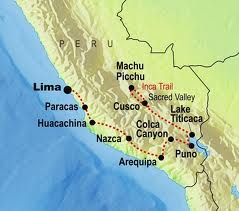
Next we had a tour of the city. Cusco is like a wheel, like Rome Italy , where all roads are spokes that lead to the center square. This is also based on the path of the sun. Below is both a map of Cusco and a calendar from the Incas.

Screen Shot 2012-12-22 at 9.39.10 PM

Screen Shot 2012-12-22 at 10.12.29 PM

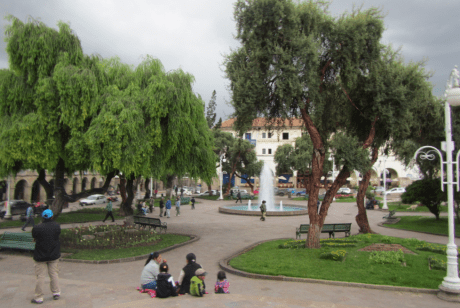
The center is magnificent, charming with little shops and restaurants all around it and a green square in the center. Cusco, or “Navel of the World”, was the capital of the Incan empire.


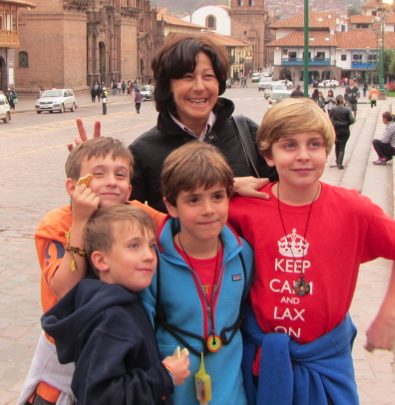
Before moving on to our adventures here, we must begin with Luz, our guide.

LUZ!


She was one of the kindest, strongest, most gentle, knowledgable, funny, joyous people we have ever met.

Screen Shot 2012-12-22 at 10.31.43 PM

She shaped our experience of this magical and transformative trip in a way words cannot describe. She helped us feel safe enough to let our curiousity run wild and hearts be free to explore. There are certain teachers, like both Leo and Finn’s at Rowayton school, Mrs. Malkin and Mrs. Maxwell,  that have the ability to shape and foster growth in a way that  is filled with enthusiasm and joy and love. We cried at the end of journey when we had to say goodbye. We fell in love with her along with this magical country.


Unknown-3images

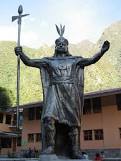
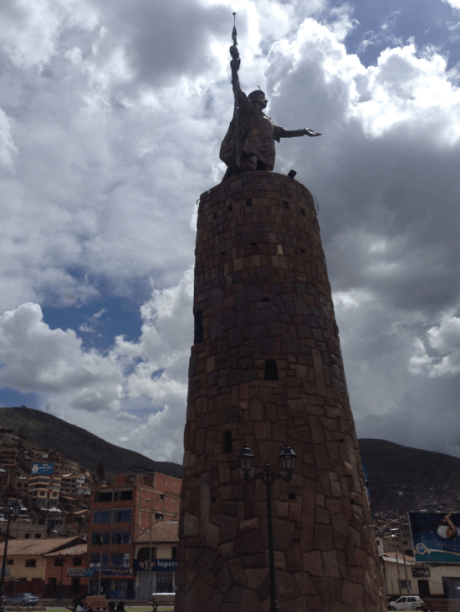
We learned about Pachacutec, (pronounced PAACHA-KOOTIE). He was the most loved, revered, worshipped and last of the Incan kings has statues throughout the city honoring his tremendous contribution to the people. He was  great military strategist, leader, engineer and philosopher. He built aqueducts, bridges, paths, agricultural terraces and houses for food called Qolqas. His government distinguished itself through expansion with justice and prosperity for all. He is also responsible for the conception, planning, designing and building one of the 7 wonders of the world: Machu Picchu.


We saw magnificent works of art. When the Spanish took over, those they did not kill and showed an aptitude for art, were forced to create Christian scenes to convert the them to their way of thinking and try to rob them of their identity. As well as to act as “Christian propeganda

Unknown-2

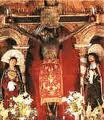
The most famous sculpture in Cusco was crafted by the indigenous people.The Spaniards made them carve a rendering of Jesus on the cross  having never seen a likeness of Jesus before they made him dark brown, like themselves.  Because they could not imagine a kind and loving Jesus being the same color as the Spaniards that had slaughtered most of them. The Spaniards put this carving in a box and never touched until…

many many  years later when the Spanish were gone there were a series of lasting earthquakes that did not stop. The after shocks were causing massive damage and would not stop. For four days they paraded every religious relics they could find around the city to appease whatever god they had angered. It wasn’t until they found and uncreated the dark brown Jesus and paraded him around the town that the earthquakes abruptly stopped.


The Spanish invaders considered the indigenous people half human, half beast so they would not allow them to worship in the same church. -We visited both an indigenous church and a Spanish cathedral.

IMG_1864


Though the cathedral was much more grand with more artwork and guided everything, the indigenous church was deeply artistic and beautiful. There was a cedar tree trunk 6 feet around by 20 feet high that had intricately carved designs and biblical scenes carved in relief. After the artist had completed this massive work, the Spaniards killed him. Never wanting the beauty of this piece to be equalled.

Screen Shot 2012-12-22 at 10.36.07 PM

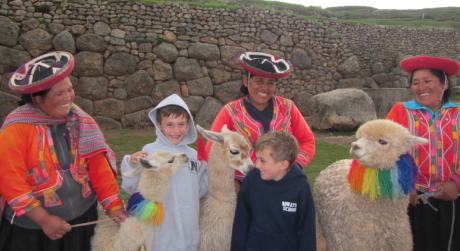
Oh and did we mention the LLAMAS!?!?!?

They are EVERYWHERE. Leo and Finny had the chance to get “up close and personal” with more than a few.

The dogs were fantastic. All different breeds! They were seemingly nomadic but incredibly well fed and had amazing amounts of character.

Screen Shot 2012-12-22 at 10.39.18 PM

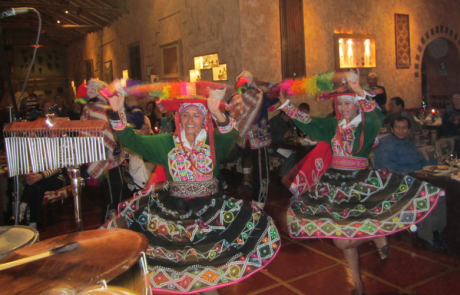
That night for dinner we ate at Tunupo Restaurant. They had good food but an amazing band that played Peruvian music and had colorfully costumed men and women dancers that seemed to be telling a story about the changing of the seasons and LOVE.

Screen Shot 2012-12-22 at 10.38.00 PM


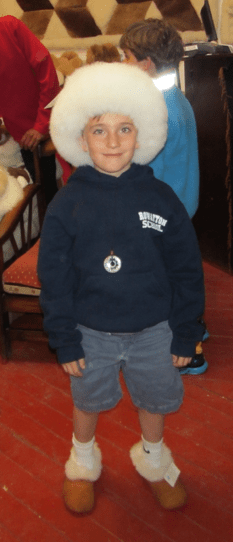
-And it seems that Finny has finally found himself.


🙂

Travel Safe!

JKLM

Next: Machu Picchu

Wednesday December 19

Screen Shot 2012-12-22 at 9.49.37 PM

Peru!

Unknown Unknown copy

This is the most beautiful country we have ever seen.

Screen Shot 2012-12-22 at 6.21.30 PM

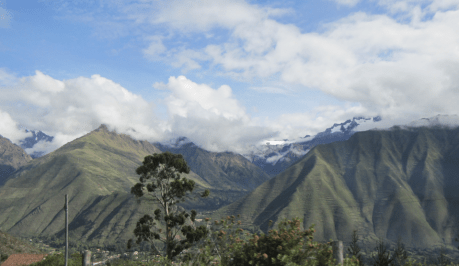
The mountains are lush and green and curvaceous. The weather is drastic.

Screen Shot 2012-12-22 at 10.03.39 PM

The sky is infinite and the clouds descend below mountain peaks. There are clouds on top of clouds on top of clouds. The clouds form a mist that drift through the landscape like a mysterious fog.

Screen Shot 2012-12-22 at 10.04.42 PM

One of the maintenance men on our ship, a man named Paul, who is from Jamaica, made perhaps the most astute insight about Peru, ” Such a big place for four letters.”


So in keeping with this thought… we need to actually do PERU in a few posts. this is Part 1.

Screen Shot 2012-12-22 at 9.57.36 PM

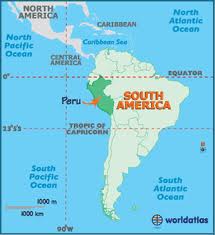
Ancient Peru had many prominent Andean civilizations, most notably the Incans whose empire began in the 1200’s and was captured by the Spanish Conquistadors in 1533. Peruvian independence was declared in 1821. After years of military rule, Peru returned to democratic leadership in 1980. Lima is the capital and the main exports are medicinal plants, palm oil, wheat, dry beans, poultry, beef, pork, dairy, guinea pigs and fish. The terrain includes the Amazon jungle, in the eastern lowlands, the high and rugged Andes in the center and the western coastal plain.


Callou, Peru

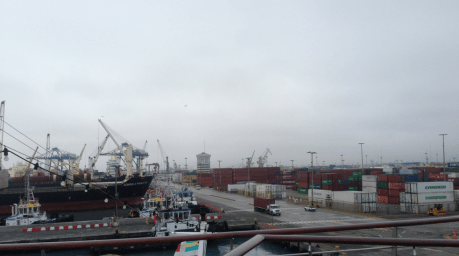
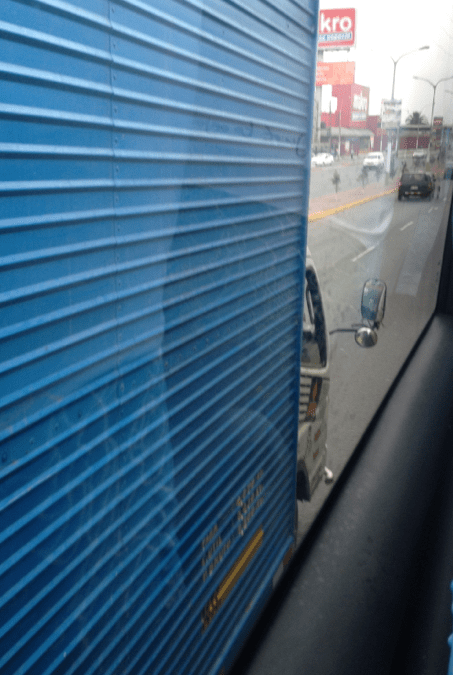
Screen Shot 2012-12-22 at 10.06.10 PMPeru is a shipping transit location.  It is an industrialized city based mostly on import and export. We saw HUGE CAT tractors and commercial machines unpacked from enormous storage containers. From here they will be distibuted to different final destination ports.
Screen Shot 2012-12-22 at 10.09.52 PM

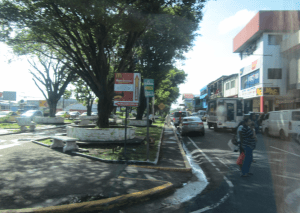
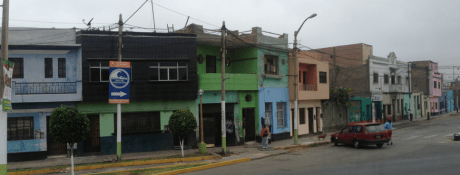
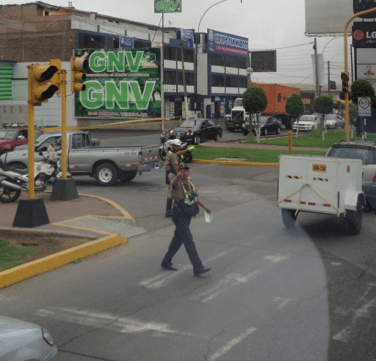
Buildings are remarkably colorful. Though all made out of the same box cement material there is no limit on imagination. The local buses people commute on are much smaller but no less colorful than the buildings. It felt to be across between Miami and Cuba – colorful but a bit bleak.

Screen Shot 2012-12-22 at 10.07.13 PM

Cars drive extremely close together and there are a lot of police.

Screen Shot 2012-12-22 at 10.09.18 PM

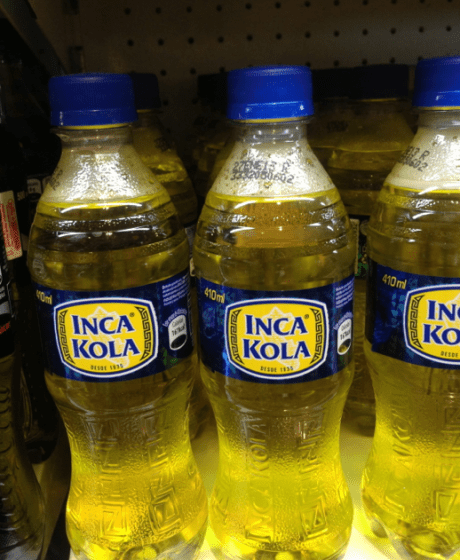
And of course INCA KOLA

Screen Shot 2012-12-22 at 10.08.44 PM

The nectar of the gods… or so it is advertised.

So sweet even L & F didn’t like it.

Travel Safe!

JKLM

Next: Cusco PERU!

Monday, December 17,2012

Guayaquil, Ecuador
Unknown Unknown-3

DO YOU LIKE CHOCOLATE?!

DO YOU LIKE MANGOS?!?!

-did we ask if you liked chocolate?…

That was the question asked of us as we climbed on to the bus that was to take us about an hour and a half inland.

-well, obviously the answer is YES!

Screen Shot 2012-12-17 at 5.12.11 PM

Then you are in the right place.

Welcome to Guayquil, Ecuador. The cocoa, mango and banana capitol of the world.

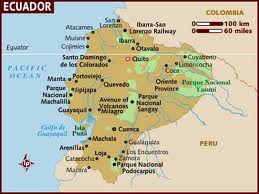
Ecuador (which literally translates as “Republic of the Equator“) itself has a population of about 14 million -while the city of Guayaquil has 3 million. Arguably (if you ask a local, like our tour guide) Guayaquil is the financial and agricultural center of the country. The actual capitol of Ecuador is Quito. The main language spoken here is Spanish (94% of the population speaks it) the remaining 6% speak 11 other languages.

Screen Shot 2012-12-17 at 4.46.50 PM

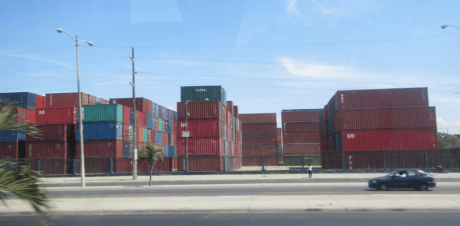
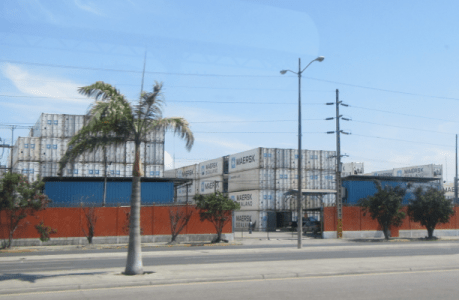
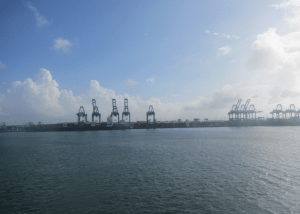
It is an industrialized 3rd world country , it is a representative democratic republic, where everyone works. We can see this the moment we get off the boat. -In other ports there have been stores and people. on this one, there is nothing but massive containers. Filled with produce and goods.

Screen Shot 2012-12-17 at 4.46.55 PM

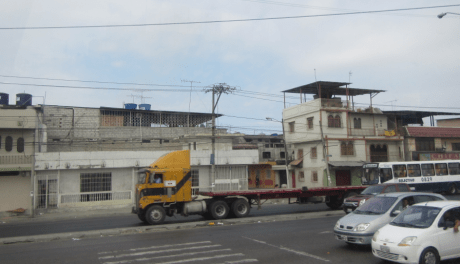
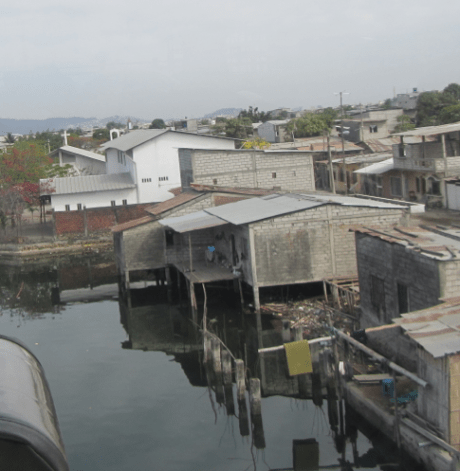
Guayquil is a city of stark contrasts. There is little beauty in the city itself. Nearly everything is made to work. Buildings and homes all made from and of cement -and some bamboo.

Screen Shot 2012-12-17 at 4.20.54 PM

Screen Shot 2012-12-17 at 4.21.30 PM

Screen Shot 2012-12-17 at 4.21.54 PM

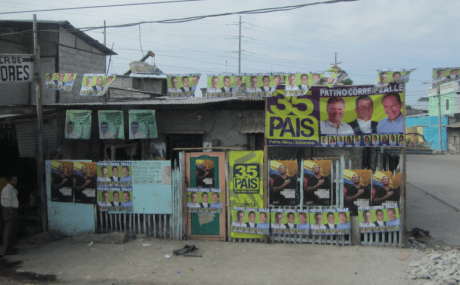
The most colorful things in the city are the political ads pasted on the sides of some buildings.

Screen Shot 2012-12-17 at 4.22.02 PM

Screen Shot 2012-12-17 at 4.22.11 PM

All the vehicles are trucks or cars. There are no pleasure vehicles. Motorcycles are also in large use.
This is a hardworking city. -But also a dangerous city. We can feel this as we exit and make our way to the country.

Screen Shot 2012-12-17 at 4.22.22 PM

The wrought iron window and door grates, were once ornamental and now serve as safety. They came from Paris. -The French immigrated when cocoa became among the largest export.

Screen Shot 2012-12-17 at 4.23.00 PM

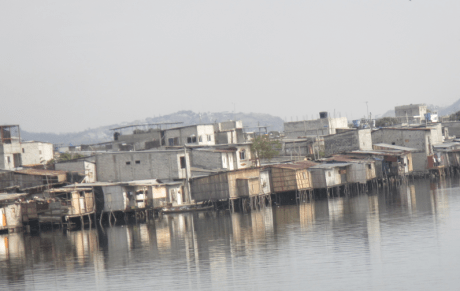
Guayaquil also boasts the worlds largest squatter population. In fact there is illegal land trafficking. There are many police. It is the most dangerous city of all we have been and will be going to. Every building has a water shed on top because they live only four feet above sea level. There are two seasons, dry and wet. And there are three climates: hot, hotter, hottest.

Screen Shot 2012-12-17 at 4.44.38 PM

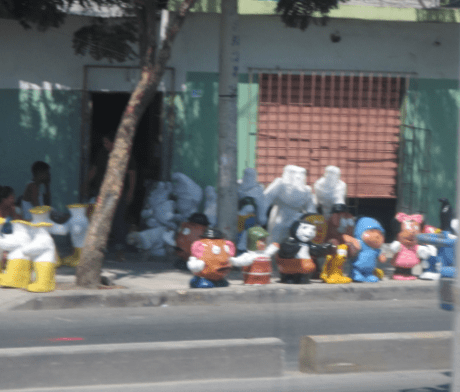
One cool note: in Ecuador when New Year’s Eve happens, they celebrate by taking these large paper mache figures (like above, usually made to look like popular characters like Mr. PotatoHead, or Shrek) and FILL THEM UP WITH FIREWORKS. Then they light them in the streets at midnight!

Screen Shot 2012-12-17 at 4.44.08 PM

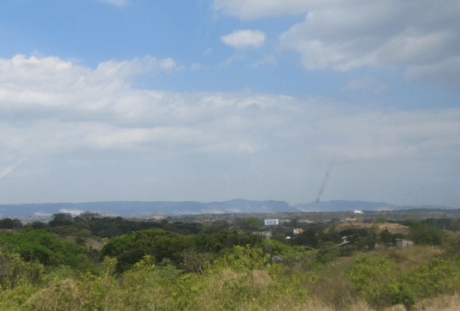
As we get into the country the scenery changes quickly. It is a very dry climate (the rainy season starts in January and ALL the rainfall for the year happens within this month or so period). It is a dry tropical forrest. All the schools are closed for the HOTTEST season, from January until May. That is their summer vacation.

Screen Shot 2012-12-17 at 4.26.45 PM

Okay, so let’s get on to the cocoa and mango plantation.

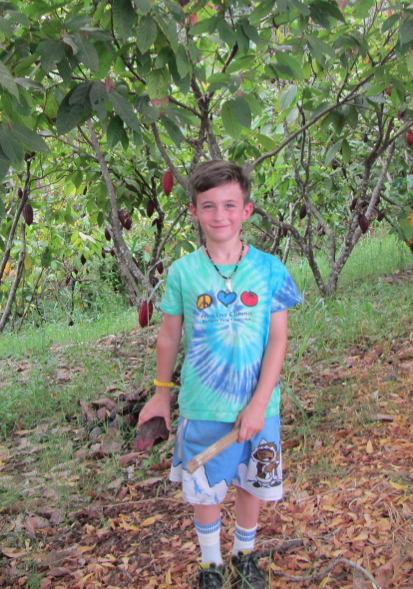
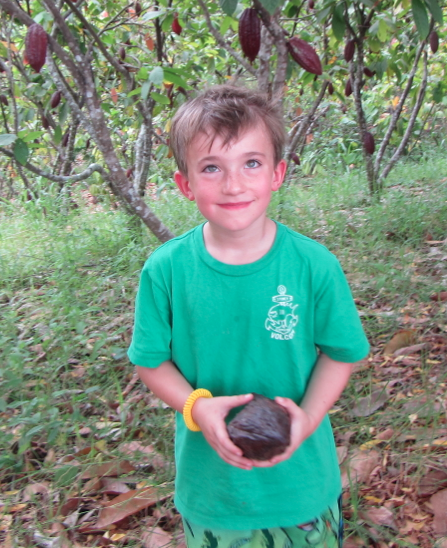
100 percent of French, Swiss and most American chocolate comes from Ecuador. All nestle products comes from here. The plantation was about an hour outside the city. When we arrived we were treated to local fruit drink and fried plantains with home made white cheese. It was an amazing beautiful plantation and home.

Screen Shot 2012-12-17 at 4.27.08 PM
We hiked through the plantation and saw amazing varieties of trees including

Screen Shot 2012-12-17 at 4.28.04 PM

Poncianas with pink blossoms,

Screen Shot 2012-12-17 at 4.29.03 PM

Jacaronda with amazing purple blossoms,

Screen Shot 2012-12-17 at 5.09.16 PM

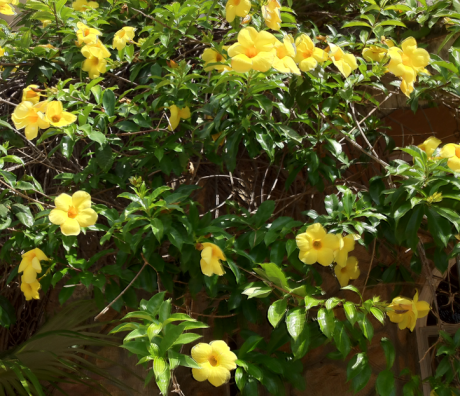
Alamandra with beautiful yellow flowers which is a kind of Hibiscus,

Screen Shot 2012-12-17 at 4.31.51 PM

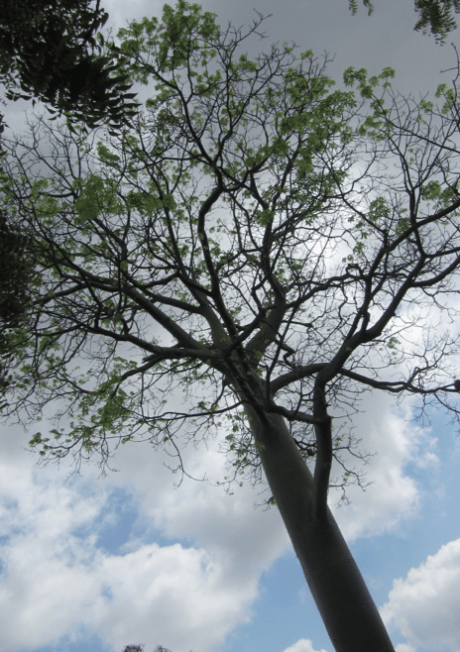
Mahogany, Teak, Kapoc with extremely thick trunk,

the Noni tree with fruit that helps cure cancer

and obviously the cocoa trees, which looked a lot more like big shrubs!

Screen Shot 2012-12-17 at 4.32.47 PM

The plantation was originally owned by a german family named Segrada

Screen Shot 2012-12-17 at 4.31.06 PM

They were forced to leave during world war II. Since then, the plantation has been bought and sold and now is owned by another family. Although they do not live there, they keep (out of respect for the original family) the feeling of a true home.

Including the graves of the families beloved dogs.

Screen Shot 2012-12-17 at 4.28.15 PM

Okay, now on to the good stuff: CHOCOLATE!

They way that Chocolate is made is pretty amazing.

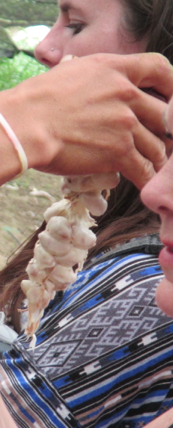
First, they start with a large COCOA SHELL (-which really does beg the question: what came first, the Nut or the Tree?..).

Screen Shot 2012-12-17 at 4.32.11 PM Screen Shot 2012-12-17 at 4.32.04 PM

Inside are a bunch of Cocoa Nuts, or seeds.

Screen Shot 2012-12-17 at 4.34.12 PM

Screen Shot 2012-12-17 at 5.11.09 PM

Screen Shot 2012-12-17 at 4.37.24 PM

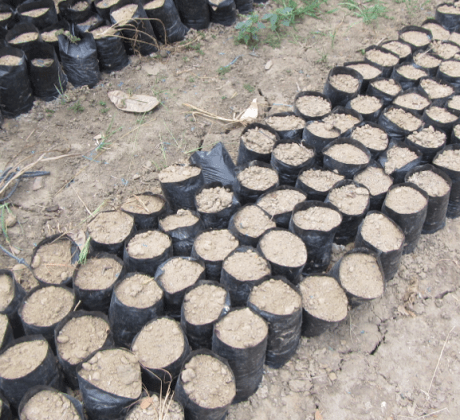
They plant the seed

into a small bag filled with soil.

Screen Shot 2012-12-17 at 4.33.28 PM

In about 3 weeks, it looks like this.

Screen Shot 2012-12-17 at 4.35.24 PM

THEN comes the MAGIC part.

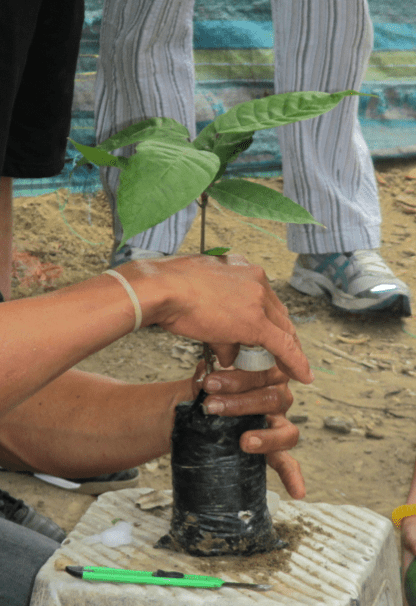
The farmer “splices” or cuts in a branch from a very special cocoa tree called CNN-51.

Screen Shot 2012-12-17 at 4.36.17 PM

This branch grafts into the tree and increases the production of the tree by SIX TIMES!!

Screen Shot 2012-12-17 at 4.36.41 PM Screen Shot 2012-12-17 at 4.36.52 PM

this is what it looks like in three months.

Screen Shot 2012-12-17 at 4.33.45 PM

-and three years.

Screen Shot 2012-12-17 at 4.37.07 PM

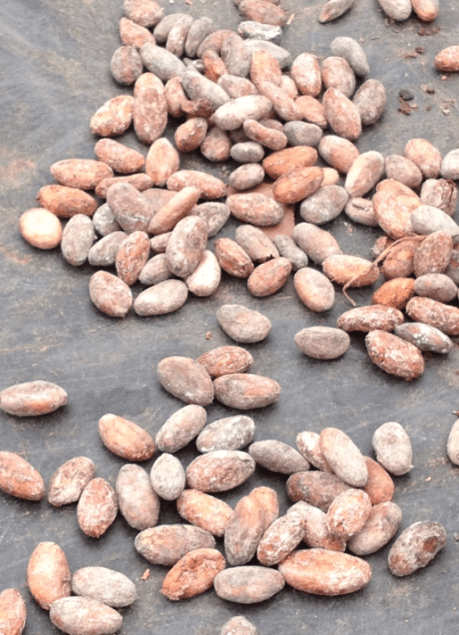
At this point, the tree can be planted and it is one season form beginning to produce. The large PODS are harvested. and the same process as in the beginning, the seeds or nuts are cut out of the POD.

Screen Shot 2012-12-17 at 5.12.30 PM

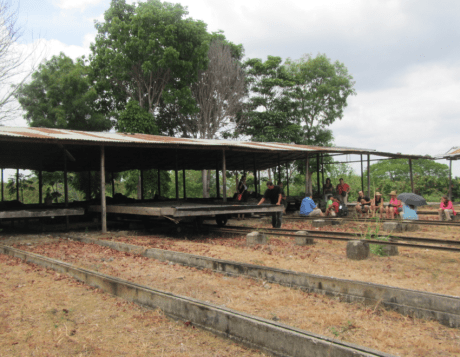
The nuts are then put in large sacks and into open rooms with tin roofs to “bake” or dry out.

Screen Shot 2012-12-17 at 4.39.47 PM

After sitting there for a couple of days, the sacks taken out and loaded into a carriage.

Screen Shot 2012-12-17 at 4.40.06 PM

From here they are carted (by tractor and horse) up into the factory, where this nut becomes chocolate.

Screen Shot 2012-12-17 at 4.40.37 PM

Screen Shot 2012-12-17 at 4.40.18 PM

Screen Shot 2012-12-17 at 4.40.29 PM

All of the nuts are loaded into this machine.

they are heated up and then cooled down.

this turns the nuts into almost a thick powder. This powder is then heated up again and stirred. the longer it is heated and stirred the sweeter it becomes.

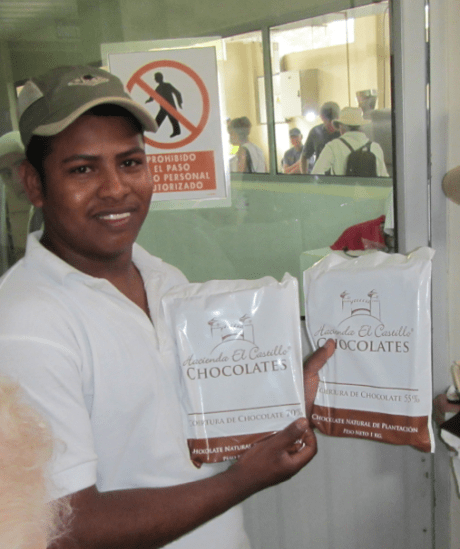
Then… TADA: CHOCOLATE!!

Screen Shot 2012-12-17 at 4.42.15 PM

We also got to taste the most delicious mango we have ever had

Screen Shot 2012-12-17 at 4.41.01 PM

and see the berries that help make red food dye

-that we used for face paint.
Leo created his own game, which he calls stick bowling, where you push a watermelon down a hill with a long bamboo stick.

He also created a new drumming instrument with the shell casing of the cacao plant and a shorter bamboo stick. Leo and Finn climbed a mango tree and picked their own mangoes.

Whew! I think that’s enough for one day.

Next: PERU!

Screen Shot 2012-12-17 at 4.27.36 PM

Travel Safe!

JKLM

🙂

Although we are far away, our heart is still in our home of Rowayton, our beautiful school and all our friends.

Today in reverence for the tragedy that happened only a town away (and a town our boys at Rowayton play in lacrosse at our jamboree) the entire ship was asked to wear the school colors of the Sandy Hook School: Green and White.

We are shocked and speechless.

GREEN SANDY HOOK

Our hearts, prayers and love go out to all the families effected.

JKLM

Sunday, December 14, 2012
At Sea -On Ship
0 degrees latitude
78 degrees longitude
11 knots average speed
2k ft depth of ocean
79 degrees water
75 degrees temp

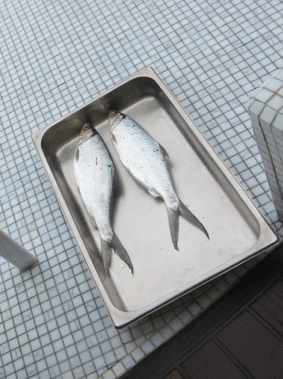
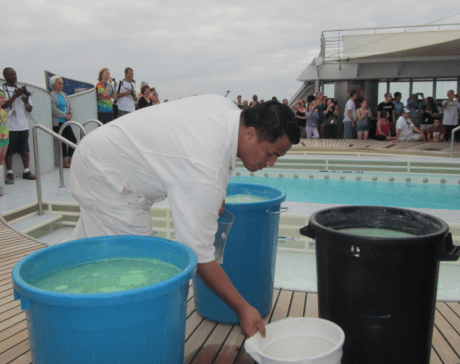
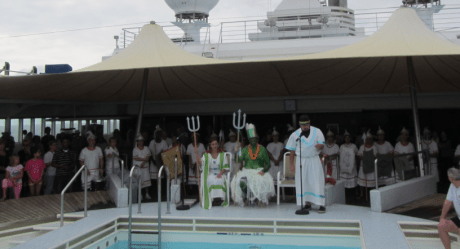
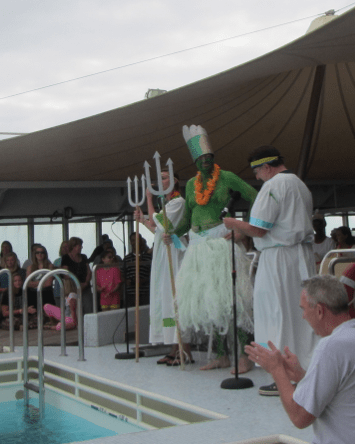
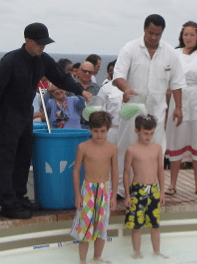
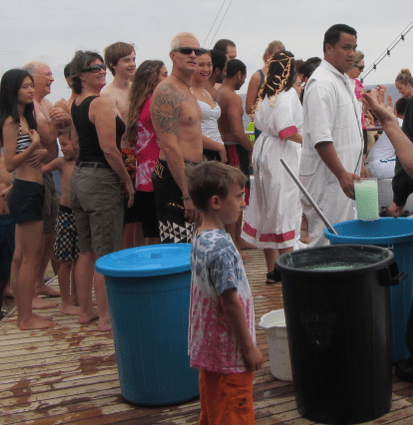
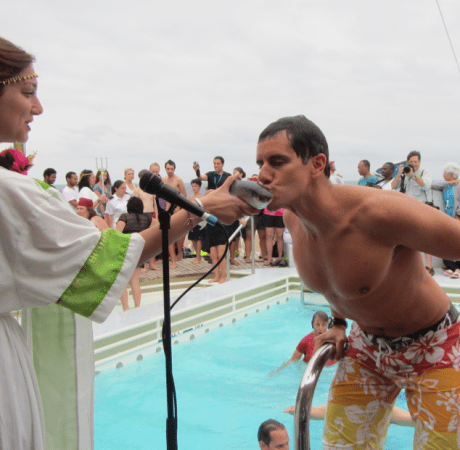
Today we passed the EQUATOR!!! So…. We are no longer polliwogs but have now become Hardshells! Very exciting. In fact, so much so, there was an entire (extremely entertaining) King Neptune ceremony, because he guards the equator, wherein the brave had a concoction of fish guts thrown over their heads, then jumped in the pool, then kissed the Queen’s ring, kissed the fish King Neptune held out and voila… Hardshells. Of our clan, only Leo was brave enough to undergo the full ceremony. -From the T clan Nicky and Chalva earned the title!

Screen Shot 2012-12-17 at 5.24.49 PMScreen Shot 2012-12-17 at 5.24.41 PM


Preparing the FISHGUTS…

Screen Shot 2012-12-17 at 5.24.56 PM

The CREW enjoying a very early morning pre-fishguts meal!

Screen Shot 2012-12-17 at 5.25.15 PM

Screen Shot 2012-12-17 at 5.25.34 PM


King Neptune, his lovely Queen -and loyal subjects…

Screen Shot 2012-12-17 at 5.25.46 PM Screen Shot 2012-12-17 at 5.25.51 PM

THE NEWLY CHRISTENED HARDSHELLS LEO AND NICKY!!

Screen Shot 2012-12-17 at 5.26.18 PM

Finny decided to sit this one out…

Screen Shot 2012-12-17 at 5.30.44 PM

…and the KISS! Nicely done Chalva!


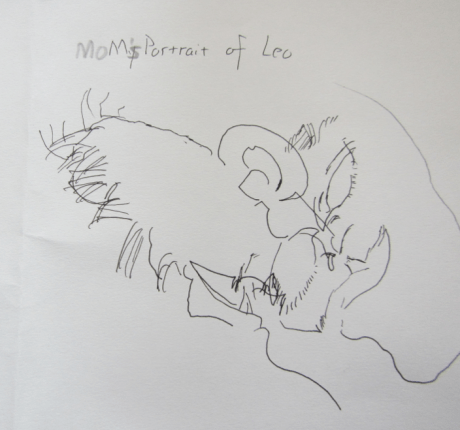
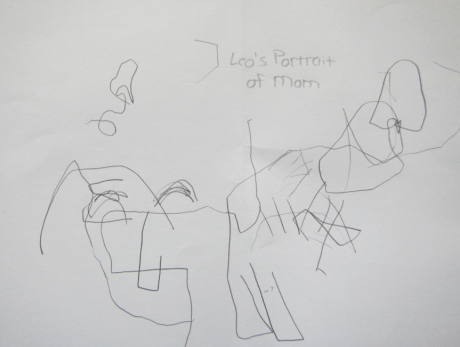
Also, Leo and Mom attended a blind contour drawing class with Susan Singer yesterday wherein we drew our hand as if we were ants making the long, slow journey across the textured terrain of Skim with All it’s creases and lines and arcs and valleys. Today we attended a meditation class with monk Bhante Sujatha. He spoke about a way of being in the world with acceptance, respect and letting go.

Screen Shot 2012-12-16 at 11.53.58 AMScreen Shot 2012-12-16 at 11.54.06 AM

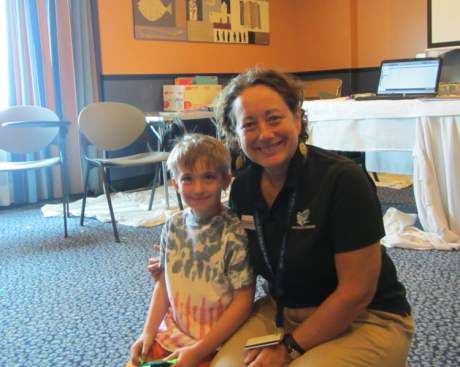
Finn has been attending class for kids where he does art projects and learns about the ports we are approaching. Here he is with his teacher Jeanine.

Screen Shot 2012-12-16 at 11.53.48 AM

Before each port there is a pre-port lecture wherein we learn all about the history and culture of the country/city in addition to safety information we need to know.

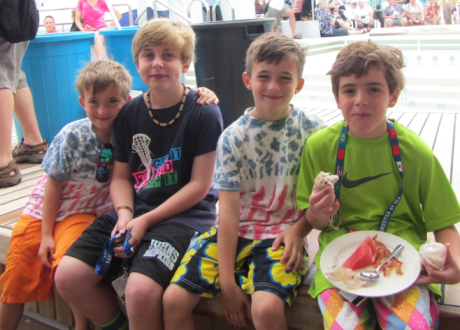
-We have been having a wonderful time with our dear friends Shannon, Chalva, Sebastian and Nicky!

Travel Safe!

JKLM

🙂

Dean Jacobs

December 12, 2012

Sorry these posts are out of order. There’s a lot of stuff going on and not much time to get onto the computer to post!

Screen Shot 2012-12-16 at 9.53.40 AM

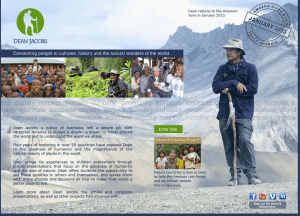
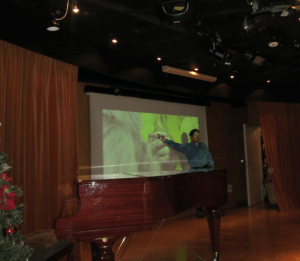
Today we had the chance to hear Dean Jacobs speak. –and boy, we were blown away! If you have a moment, hit Dean’s site. Truly his journey is inspirational. www.deanjacobs.org

Have you heard of the 7 Wonders of the World?  The Pyramids, The Hanging Gardens of Babylon, The Lighthouse at Alexandria, to name three of them. Dean went seeking 7 other wonders. The wonder of sight, of taste, of hearing and smell. The wonders of touch, of laughter and of love. These are the 7 wonders of humanity. They have no price tag, no hype and no drama. But they are real, priceless and timeless. These wonders cannot be faked; they can only be experienced.

Since 2001 (when he quit his corporate job, sold his home and sought to answer the questions within his soul) he has traveled for 4 years and explored over 50 countries. Today he was speaking about his work with the Dian Fossey Institute and his travels to AFRICA to live amongst and study the Silver Back Gorilla!

imagesUnknown copy

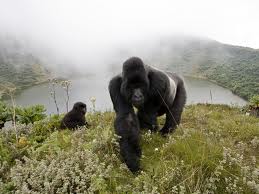
He went into the jungles in Rwanda and spent some 18 months there studying the Silver Back Gorilla.

Screen Shot 2012-12-16 at 9.38.40 AM

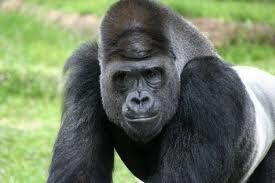
Silver Backs are called this because when a male gorilla turns 7, the hair on his back turns a shimmery silver. This only happens to the male.

images-1

Silver Backs reach about 6 ft tall when standing up straight and weigh on average about 450 lbs. They live on average 40 yrs. They live together in small communities called Groupings. Groupings average about 10-12 gorillas. There is only one male ALPHA within each grouping.  The Alpha’s job is to always keep the Group safe –and make sure that any wandering other males do not try and come in and take over the group. Fro if that were to happen, all the young would be killed by the new Alpha. As he only has the interest in perpetuating his own DNA and lineage.

Unknown-2

They groups are close knit and have remarkable ways of communicating (through a series of grunts and “cough-line” sounds) with one another. They play, groom, eat and have friendships that last for decades.

Unknown-1

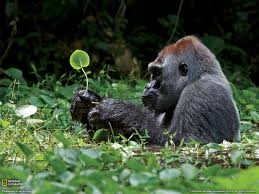
Gorillas are quite picky about things. They never sleep in the same place fro more than one night. They sleep up in trees in a bed of leaves, eat about 70 lbs of vegetation daily, relax by hanging between trees and always climb down to the ground to go to the bathroom.

Unknown

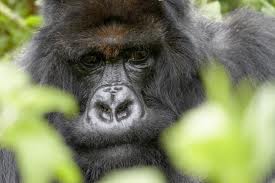
Each gorilla is recorded by the Fossey Organization to track them from birth to death. Although Gorillas each have fingerprints unique to each of them, it is their face that is drawn out and used to identify them.

Screen Shot 2012-12-16 at 9.38.25 AM

As you can see we truly enjoyed meeting Dean and hearing about his amazing adventures! We’re trying to get him to come to Rowayton Elementary School.

Screen Shot 2012-12-16 at 9.39.36 AM

Think we’ll have Finny ask him, as they have forged a friendship.

Safe Travels!

JKLM

🙂

PANAMA CANAL

Friday December 14, 2012

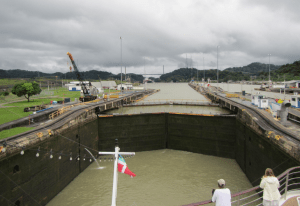
Wow… what to say about TODAY? Well, aside from being one of the 7 wonders, we had the unique and AMAZING experience of passing through one of the continental divides: the Panama Canal today.

Screen Shot 2012-12-15 at 4.00.06 AM

Screen Shot 2012-12-14 at 5.34.34 PM

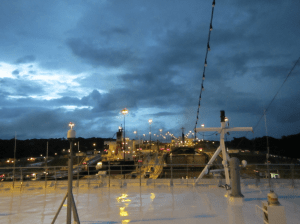
We stared our journey before first light. Around 5:30 this AM we heard the intercom announcement that we would commence proceeding through the Panama Canal .

Screen Shot 2012-12-14 at 5.38.07 PM

Interesting facts about the Canal: it was built almost 100 years ago (completed in 1913, opened in 1914). This modern marvel cuts straight through Panama, connecting the Atlantic to the Pacific while dividing North America and South America. The French first attempted to make it, but after a massive loss of life (over 25,000) and seven years, they gave up. It was only after a cure was discovered for malaria that, under American president Teddy Roosevelt (and American financier J.P. Morgan), the Panama Canal was restarted and then completed.

Screen Shot 2012-12-14 at 5.34.47 PM Screen Shot 2012-12-14 at 5.35.36 PM

Boats that make the passage are charged two ways: the amount of water that they displace as well as number of passengers. For our ship, the MV EXPLORER the cost is about $300,000.00! The smallest amount ever paid was by Richard Halliburton. He swam the canal and paid out .36 cents in the early 1900’s. Between 42-44 ships make the voyage daily. It runs 24 hrs a day. And because we are close to the equator, there is never a time change. -So every day is the same. Which means every day from 6:30 AM and 6:30PM the Atlantic to Pacific trips take place. And from 6:30 PM to 6:30 AM the Pacific to Atlantic. This happens 365 days a year.

The Panama Canal earns about 1.2 million dollars a DAY in profit for the country of Panama.

The Canal cuts about 20 days of travel from maritime travel. And as 97% of all goods are transported via maritime (the sea), the amount of time and money that it saves ships (and the cost of goods) is HUGE.

The way it works:

Screen Shot 2012-12-14 at 5.36.03 PM Screen Shot 2012-12-14 at 5.37.09 PM

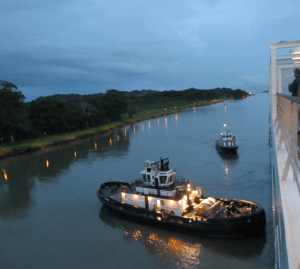
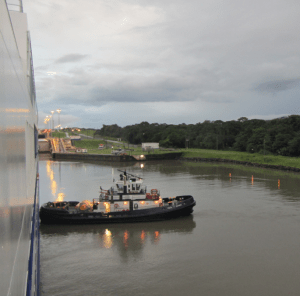
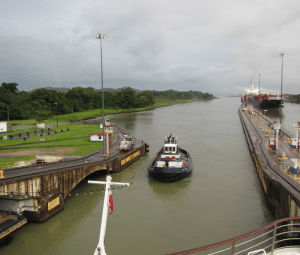
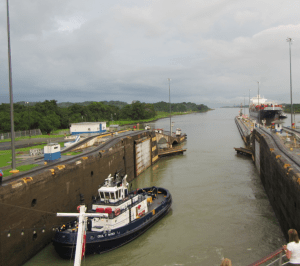
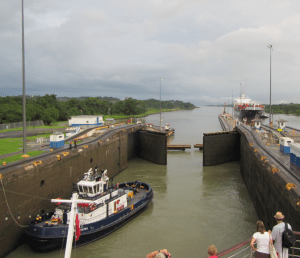
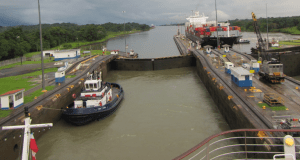
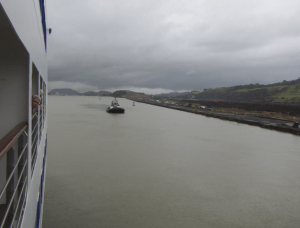
We enter from the Atlantic Ocean in the Caribbean Sea at  Manzanilla Bay. And are greeted by a tugboat that will push us along in our journey. We will run our engines as well, but the tugboat is essential to make sure all goes smoothly.

Screen Shot 2012-12-14 at 5.34.56 PM Screen Shot 2012-12-14 at 5.35.21 PM

First, a special Captain boards each ship that passes through. The Panama Canal is one of the only places where a Captain gives up his boat to another Captain. This is because it is so very important that the Captain who is steering the ship know exactly how do to it. Otherwise, the vessel could crash into the walls, or another ship. He will be our temporary Captain through-out our trip through the Canal, which will last about 8 hours.

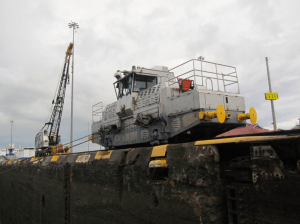
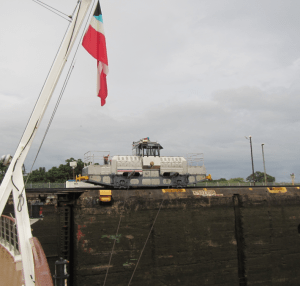
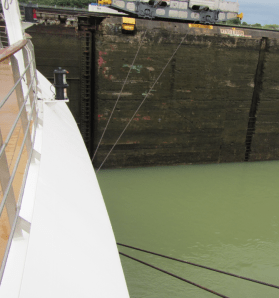
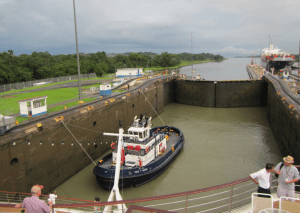
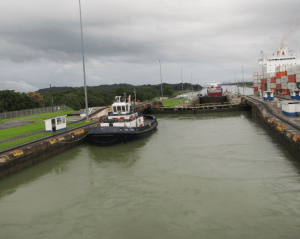
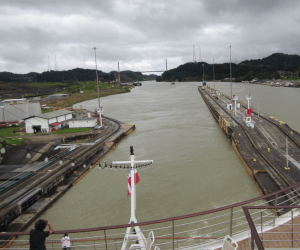
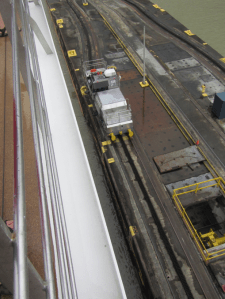
There are a series of THREE LOCKS that boats go through. One on one side of Lago Gutan and two on the other. Within each lock there are two sets of chambers. We are hooked up to a series of wire cables both FORE (front) and AFT (rear) by way of “railway” like box cars on either side, that helps to control and guide our ship as the water rises.

Screen Shot 2012-12-14 at 5.44.50 PMScreen Shot 2012-12-14 at 5.44.55 PM

Screen Shot 2012-12-14 at 5.45.03 PM

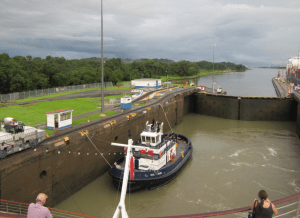
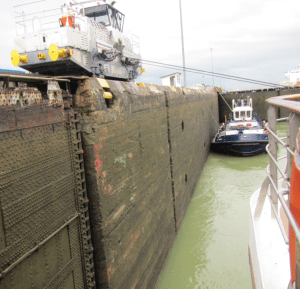
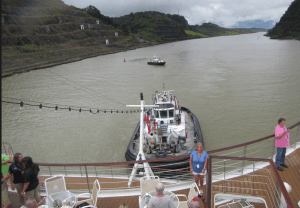
The tugboat is also tethered off, to make sure that the massive amount of water does not push her against the walls -and with only 2 feet of clearance on each side, there is no room for error!

Screen Shot 2012-12-14 at 5.38.40 PM

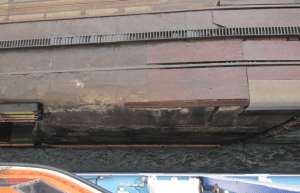
As our boat the MV Explorer enters, the chambers are closed behind and water rushes in and fills the chamber at a rate that raises our boat 3 feet per second.

Screen Shot 2012-12-14 at 5.38.50 PMScreen Shot 2012-12-14 at 5.39.27 PM

Screen Shot 2012-12-14 at 5.39.40 PMScreen Shot 2012-12-14 at 5.40.08 PM Screen Shot 2012-12-14 at 5.40.43 PMScreen Shot 2012-12-14 at 5.41.21 PM

Our vessel then is lifted to the next height of the next level and we then proceeded to the next set of “locks” –and the process begins again.

Screen Shot 2012-12-14 at 5.45.42 PMScreen Shot 2012-12-14 at 5.46.09 PM

Screen Shot 2012-12-14 at 5.46.41 PMScreen Shot 2012-12-14 at 5.47.08 PM

All the vessels then spill out into the man-made lake  Lago Gutan (Lago means LAKE), where a control room organizes the ships and gives out orders as to which boats go through next, as only one ship can pass at a time. You can see them here all circling and waiting for their number to be “called”.

Screen Shot 2012-12-15 at 4.39.26 AM

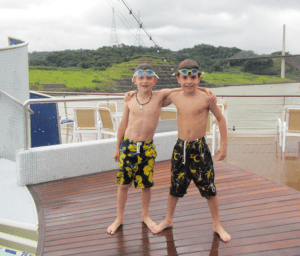
It takes quite some time, so we have time for a swim (with Nicky), a lecture on GORILLAS (which we’ll cover in the next post) and a couple of meals.

Screen Shot 2012-12-15 at 4.41.48 AMScreen Shot 2012-12-15 at 4.42.02 AM

Screen Shot 2012-12-15 at 4.40.46 AM

Now in the proper order, we travel down the narrow Gutan River.

Screen Shot 2012-12-15 at 4.40.26 AMScreen Shot 2012-12-15 at 4.41.07 AM

Along the way you can see the ridges cut into the sides of the shore. Whenever they need to drudge deeper (which is an ongoing thing, depending on how dry the “rainy season” is) they always start at the top first, then cut in these “notches” all the way down to the floor of the river, to prevent the walls from crumbling.

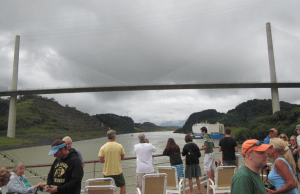
We pass under the Puente Centenario Bridge. -A beautiful expansion bridge that bridges two continents!

Screen Shot 2012-12-15 at 4.41.32 AM

Finally, we navigate the narrow Pedro Miguel Locks and then wait for a moment at Lago Miraflores (a very small lake). Finally the last set of locks, the Miraflores Locks, pass under one more bridge (Puente de las Americas) and we emerge on the other side: the Pacific Ocean!

Screen Shot 2012-12-15 at 4.42.13 AMScreen Shot 2012-12-15 at 4.42.31 AM

Screen Shot 2012-12-15 at 4.43.06 AMScreen Shot 2012-12-15 at 4.43.45 AM


We say goodbye and thank you to our friendly tugboat and then we’re off!

Screen Shot 2012-12-15 at 4.44.01 AM


Next: Ecuador!

Screen Shot 2012-12-15 at 4.03.30 AM

Safe Travels!

JKLM

🙂

Thursday December 13,2012
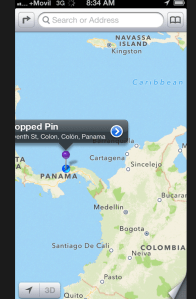
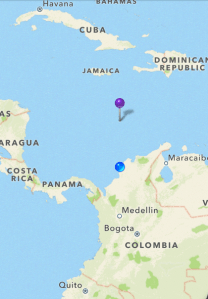
Colon, Panama
Screen Shot 2012-12-13 at 6.52.22 PM
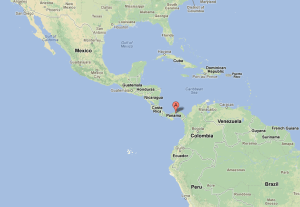
L&F learned that Panama forms a land bridge that connects North and South America. Panama also controls the Panama Canal which connects the Atlatic ocean via the Carribean Sea with the Pacific Ocean. We’ll be going through it tomorrow starting at about 5:30 AM. it takes about 8 hours to go completely through the locks. more about that on the next post.
Screen Shot 2012-12-13 at 6.51.59 PM Screen Shot 2012-12-13 at 6.53.32 PMColon has total land mass is the size of South Carolina. It is a tropical climate and has 3.4 million people. The currency is called the Balboa, which is the same bill as our dollar, because we built and “owned” (until President Jimmy Carter gave the right back to the Pnamanians) the Panama Canal. They export bananas, sugar, shrimp, coffee and clothing but the main industry is the Canal and tourism. A the center of town, all the land is landfill, which means the town itself is only about 24″ above the water.
 Screen Shot 2012-12-13 at 6.56.01 PMScreen Shot 2012-12-13 at 6.55.54 PM
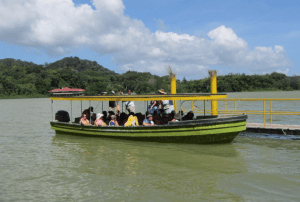
We drove to the Gamboa Rainforest Marina where we greeted our boat captain and crew.
Screen Shot 2012-12-13 at 6.56.09 PM
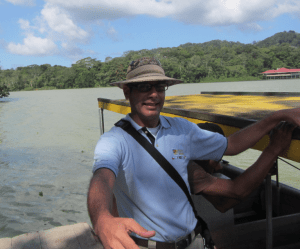
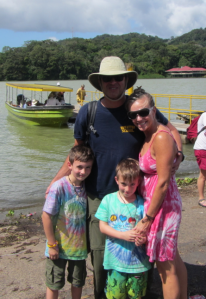
Here is our guide Manuel. Wow, did he know a LOT about EVERYTHING!  We navigated across Gatun Lake which is situated in the heart of the isthmus of Panama and serves as an important reservoir to the locks.
Screen Shot 2012-12-13 at 6.56.31 PM Screen Shot 2012-12-13 at 6.58.07 PM
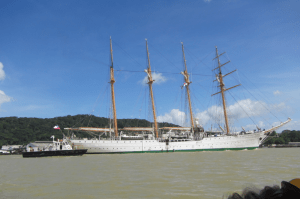
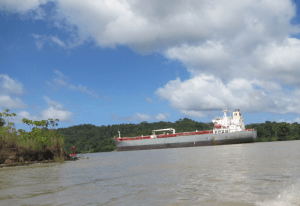
We saw amazing sailboats and containment ships and military ships.
Screen Shot 2012-12-13 at 6.58.26 PM
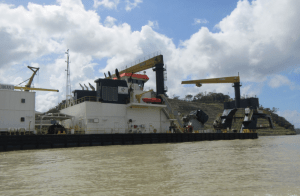
We also saw Mindy, the original ship that helped build the Panama Canal. She churns up the rock and dredges it through pipes to insure the proper water table balance which is essential for the Canal to work. One of the most astonishing things is that ALL of this is man-made. The canal and the lake itself. Over 135 different rivers feed the canal.
Screen Shot 2012-12-13 at 6.59.34 PM
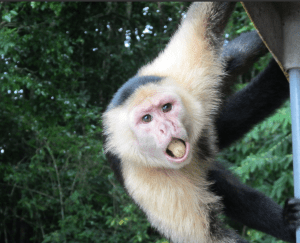
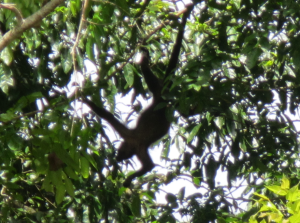
We saw a caiman (like an iguana) and saw and fed the white-faced capuchin monkeys.
INCLUDING ONE WHO CAME INTO OUR BOAT!
We saw a male and a mother with her baby on her back.
-Kelly fed the male a peanut from her hand – twice.
Screen Shot 2012-12-13 at 7.00.13 PM Screen Shot 2012-12-13 at 7.00.00 PM
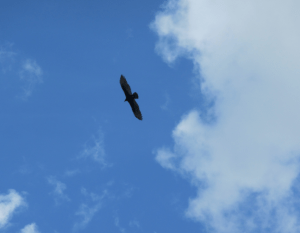
We saw turkey vultures circlimg and heard the distinctive call of the falcon and explored the flora and fauna of the Gatun Lake region.
Screen Shot 2012-12-13 at 6.51.38 PM
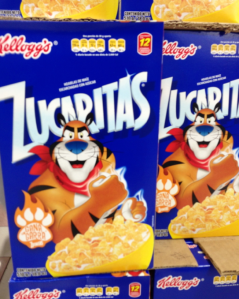
After, we visited their version of a grocery store/ Walmart, called 99 and Under. Very different. HUGE junk food section. No low fat or no fat anything. Lot of powdered milk product. Plus, Tony the Tiger seems a bit angrier on the equator in Panama.:)
Screen Shot 2012-12-13 at 7.00.36 PM
Until the next post: safe travels!
JKLM 🙂
Tomorrow: THE PANAL CANAL!!
Quote: “Perhaps travel cannot prevent bigotry, but by demonstrating that all people cry, laugh, eat, worry, and die, it can introduce the idea that if we try and understand each other, we may even become friends.”  – Maya Angelou
Observation: The exterior landscape shifts, challenges, transforms, questions, feeds our interior landscapes in ways we both know and will not for some time. It is a lot to take in – the lush mountainous terrain, the cities split between white high rises and dirty water running through half built tin, wood and cement block huts in alleys. Between the faces of old and young indigenous people and monkeys. And then the civilized white tablecloth dinner on board.
We read today that facing the questions (of your soul) is germane to the emancipation that allows you to cross into the next threshold of your life journey. You can choose not to engage this conversation but it will occur with or without you. You can either become collateral fall out or reap the rewards of the exploration. -Just a little something light to leave you with:)

Wednesday December 12, 2012
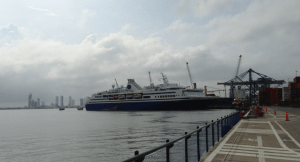
Cartagena, Columbia

Screen Shot 2012-12-12 at 5.17.42 PM

Screen Shot 2012-12-12 at 5.31.23 PM

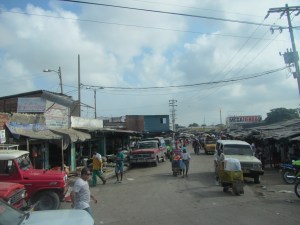
Columbia is the size of Texas and California combined. The lower 50 percent of the region contains 3 percent of the population. There are 45 million people. 40-45 percent are poverty status. 20 percent of people live on 2 dollars a day. It received independance from Spain in 1810. The capital is Bogota. Cartagena, which is a department of Columbia, has 3 million people. there are 6 economic and geographic stratas.

6 is wealthiest.

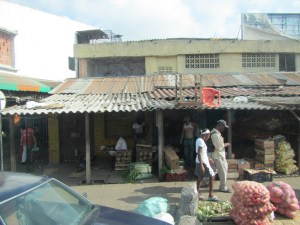
We visited 1.

Screen Shot 2012-12-12 at 5.10.30 PMIMG_0333

IMG_0336

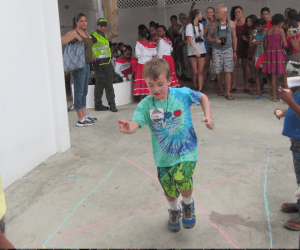
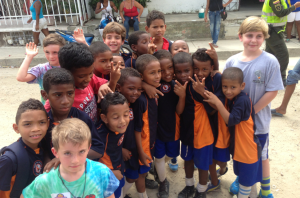
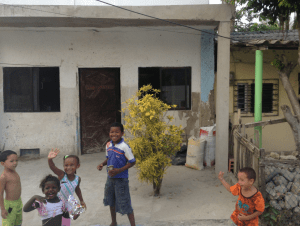
Although they have little they are filled with joy. The children go to school between either 6am and 12 or 12 and 6pm. They have their summer vacation in December and January. They are 90 percent Roman Catholic and get one present from Papa Noelle in their bed on Christmas morning.

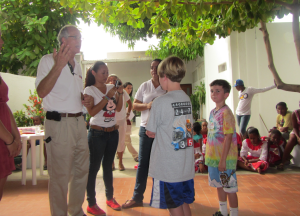
We visited the Granitos de Pas service center where they help those in great poverty by focusing their efforts on skills, housing, education, health and nutrition, recreation and culture. It is a foundation, which is where most of the social work is done.

Screen Shot 2012-12-12 at 5.12.59 PM

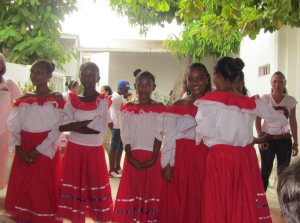
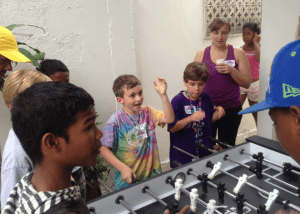
Because it is a tourist location they have taught bartending and waitressing -and 90 percent of those who graduated got jobs which is changing the future. We saw all the children from 2 and up. The girls did a local dance and smiled beautiful smiles in their red frocks and bare feet. We played games with them, mostly fuze-ball. No translation necessary! They fed us cupcakes and punch.

Screen Shot 2012-12-12 at 5.20.55 PMScreen Shot 2012-12-12 at 5.12.30 PM

Screen Shot 2012-12-12 at 5.13.31 PM

Every place we went people came to us, stopped us in the street and said hello!

Screen Shot 2012-12-12 at 5.21.52 PM

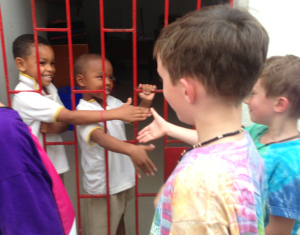
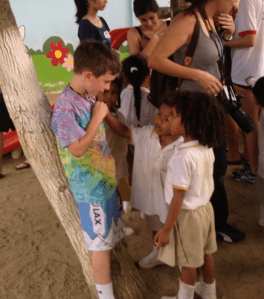
We then went to another place that helped those with extreme poverty help care for their children. A center in which children are taken care of. Fed, played with and educated. They were overjoyed to see us.

Screen Shot 2012-12-12 at 5.23.41 PM

Screen Shot 2012-12-12 at 5.24.51 PM

Screen Shot 2012-12-12 at 5.26.23 PM

Screen Shot 2012-12-12 at 5.27.27 PM

-and we were really happy to be there!

We were introduced to a revolutionary program called “Productive Patios” as endorsed by the Clinton Group.

Screen Shot 2012-12-12 at 5.28.01 PM

Screen Shot 2012-12-12 at 5.30.49 PM

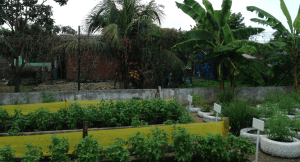
What makes this program so revolutionary is that it allows local individuals to begin (with aid from the Group and governmental credits) their own backyard gardens and then sell to local markets their produce, spices, etc. This is wonderful and will effect the social economic cultures/structures in 2 ways: 1) It will allow individuals at the lowest economic level to begin to become self sustaining by way of earning money and having stability and 2) It gives hope and pride.

Screen Shot 2012-12-12 at 5.29.54 PM

There are strict guidelines that must be adhered to -as well as a certification process that must be completed.

Screen Shot 2012-12-12 at 5.28.23 PM

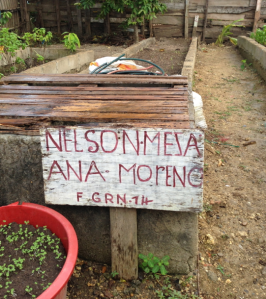
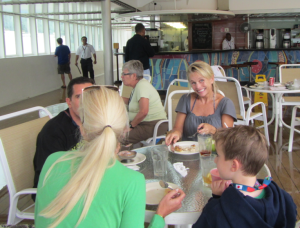
We then heard from an agricultural engineer and saw the Productive Patios at work. The people that do it (farmers) grow food to feed themselves and sell to restaurants. Basil is their biggest because they can get the most for it. They also produce a lot of spearmint because it is the main ingredient in mojitos. -They have three kinds of the spice: red, citric and regular. The citric smells divine, like lemon. Due to space constraints they grow vegetables and herbs from hanging sausage bags, painted tires, and window hanging bags. We then visited one of their homes. The couple had seven children and twenty three grand children. They were kind, open, warm and so proud of their home.
On the return we stopped at a part of a park de nationale.

Screen Shot 2012-12-12 at 5.38.16 PMScreen Shot 2012-12-12 at 5.37.43 PM

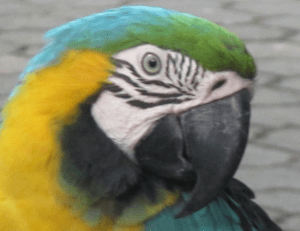
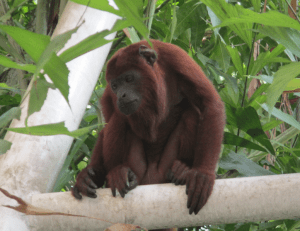
We saw peacocks, mc caws, howler monkeys, pink flamingos and a trio of pelicans flying overhead.

Quote from George Moore: “A man travels the world in search of what he needs and returns home to find it.”

Observation: Our appetite for the natural world, for creatures and plants is insatiable as is the desire to connect with those who desire it. There is more communication with a complete language barrier than in most months of talking with most people in the same language. The eyes, the smiles, the faces made us each come to life in a more meaningful way then any of the facts, interesting though they were, about the walled city and the many battles.

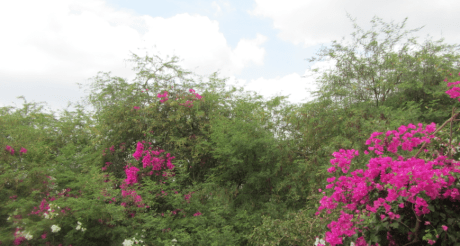
Bougainvillea is everywhere and the colors are breath-taking. And to think the flowers have no color. They are white. The color comes from the leaves surrounding the white flower, which like Poinsettas, are extremely colorful leaves.

Talk soon! L&F